Transformation of the Aborigine

Speaking of the community of Orang Asli, the first thing we imagine is living in the forest surrounded by the fresh air in the morning, and far away from the local civilisation living both in urban or rural areas.


About two years ago, United Nations (UN) came out with a report saying that the rate of poverty among the Orang Asli Community was significantly lower, up to 70 percent. If we probe the matter more in-depth, the economic situation of Orang Asli hits almost rock bottom in Malaysia if it were to be compared with those of the rest.


However, what could be the benchmarking factor that put them in such situation? In general, we are already aware on the fact the life of Orang Asli is far different if we compare with the cluster of local civilisation that undergoes a fixed routine on a daily basis. The community of Orang Asli relies heavily on the forest every day. Their dependence on the forest also does not involve any monetary exchange in order to get the goods ready for use.


But above all, our perception towards the community of Orang Asli should be considerably adjusted. They are, in any way, not living in poverty but their life revolves around historical cultures and traditions that are safeguarded since decades ago.


Education awareness among Orang Asli Community has seen major improvements in recent years and more students are registered at school from time to time. Previously, their parents were reluctant to send their kids to school and considered the education as an additional burden. But now, the Orang Asli Community has been equipped with educational plans to uplift their social status.


According to Orang Asli Development Department (JAKOA), Malaysia has a fixed action plan which was materialised to provide basic education from pre-school, primary, secondary, and tertiary level. Generally, it is a planning system that involves Orang Asli to acquire education in a more effective way.


This year alone, the government has announced that there are a total number of 98 Orang Asli schools in Peninsular Malaysia which currently accommodate 37,394 students (Astro Awani). The success is accompanied by complete infrastructures that attracted students to continue pursuing knowledge.

Holistically speaking, Orang Asli community is actually not an isolated cluster as bad-mouthed by many today. Their life may be bound to the old cultures and traditions, but chances should be continuously provided without disturbing their regular routines. As in line with current development, non-government organisations (NGO) also play a crucial role in helping to empower their social status to the frontline.

Through the Community Development Project, Islamic Relief Malaysia (IRM) as an international NGO also takes the initiative to continuously improve the social status of Orang Asli by engaging them in programmes such as the Qurban Perdana, Basic Financial Literacy and Entrepreneurship Class, and Mushroom Cultivation Course.

IRM into a More Integrated Humanitarian World

Bangi, 2 Jan 2018 – Islamic Relief Malaysia (IRM) is thrilled to embark on new a journey to further uplift humanitarian world through the Care 4 Hunger campaign in efforts to reduce starvation cases.


IRM Chief Executive Officer, Zairulshahfuddin Zainal Abidin said, “IRM plans to materialise the Care 4 Hunger campaign as aligned with our vision to help those who suffer from starvation.


Zairulshahfuddin also notes that the people who suffer from starvation are not in any favour for the cause but we as human are responsible to do something in relieving the case.


Apart from Care 4 Hunger, IRM will continue its main campaign namely Cheer to School and Emergency Winter Appeal.


Zairulshahfuddin also shared with the public that the Somalia Water Wakaf Fund (DWAS) 2.0 campaign will be launched soon this year.

Hunger, Behind the Scene

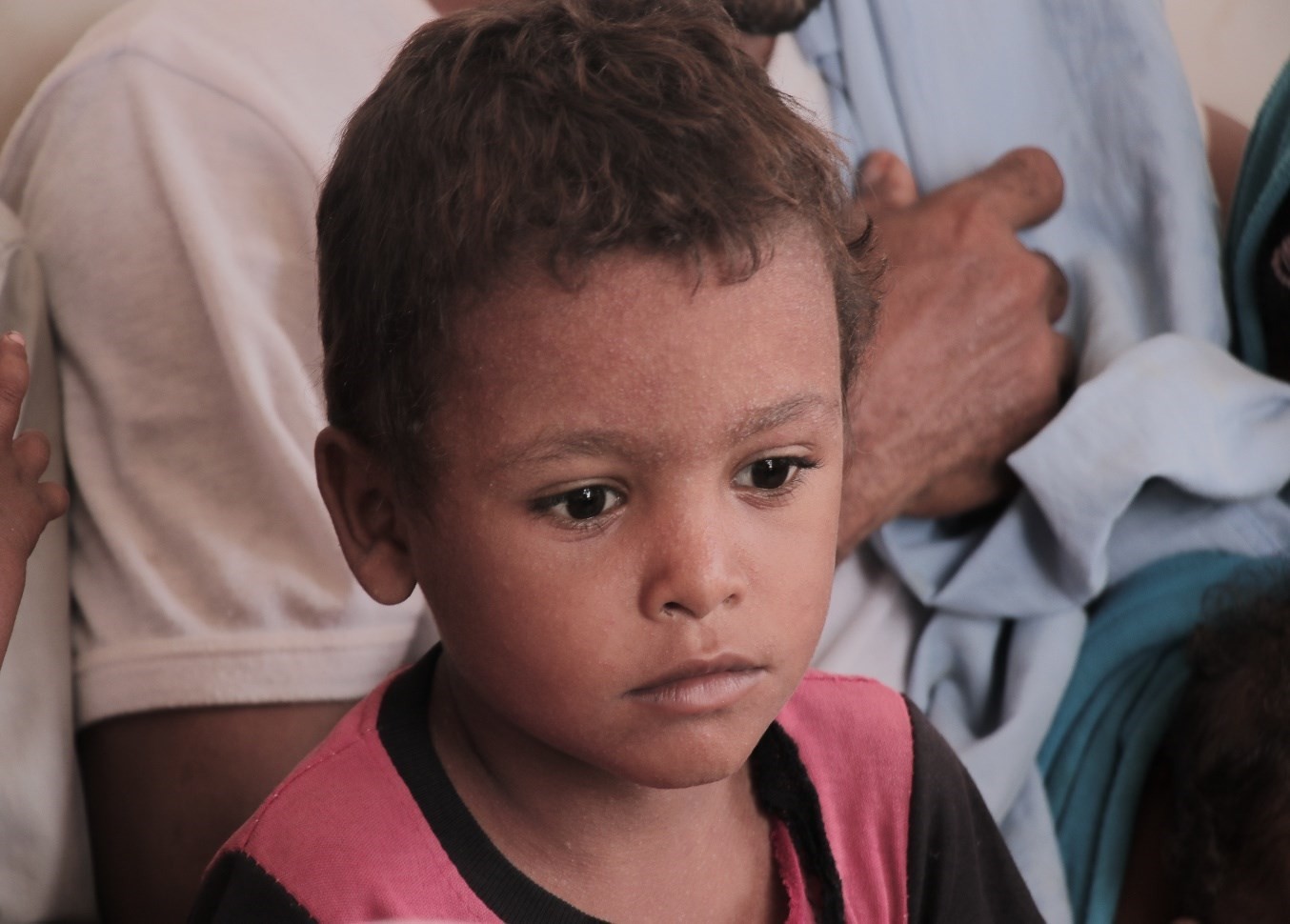
Food is considered as one of the fundamental needs for each human being in the world. It contains essential nutrients and vitamins to fulfill the requirement for body growth and development purposes. Even so across the sea, there are those less unfortunate who, mostly on a daily basis, never get the taste of food we have on the table today. In simple words, they are caught up in hunger.


To begin with, hunger is a term that defines a temporary phase of feeling hungry as a result of food shortage, and in severe cases, life-threatening lack of food as declared by National Research Council. Meanwhile, world hunger is a case that is aggravated to a global level which includes food insecurity and malnutrition. National Research Council defines food insecurity as limited access to food that are nutritionally safe to consume while malnutrition refers to a condition whereby food intake is insufficient of necessary nutrients.


Do you know that United Nations Food and Agriculture Organization (FAO) reported 816 million people out of 7.6 billion people in the world are experiencing chronic undernourishment in the last two years? Such scenario shows that almost 11 percent of human population did not have the access to insufficient needs of nutritional and healthy food.


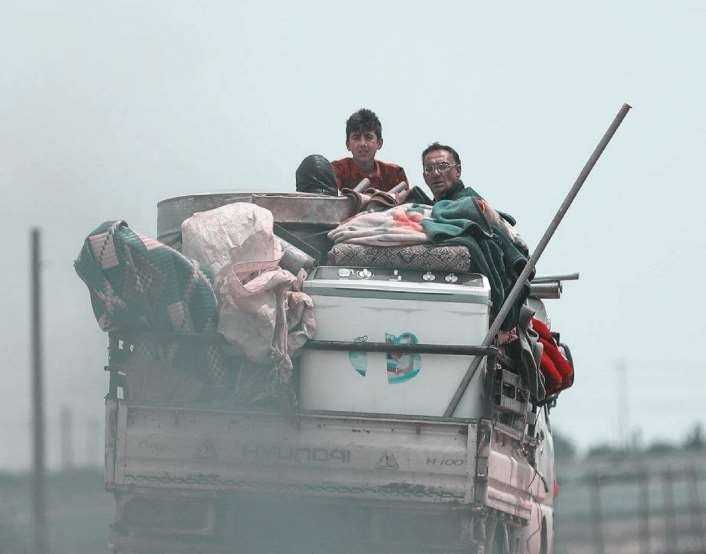
For instance, in East Africa alone, South Sudan, Kenya, Ethiopia, and Somalia, a whopping number of 22 million people are desperately in need of food assistance. From that figure, about 3.5 million children are suffering from malnutrition which can be classified as above the rate of global hunger. In Kenya, 700,000 children aged lower than five are suffering chronic starvation. Ethiopians too have been overwhelmed with disease outbreaks amid worsening of food security. Meanwhile in Somalia, 440,000 people were forced to leave their home due to the losses of crop livestock and water shortages.


If we probe deeper into each case of hunger, it is notably not because of one event that led to such consequence. But in fact, there are several disruptive events leading to these affected communities to where they are at the moment. In South Sudan, for example, instability for farmers deters crop productions which eventually results in limiting what is available at the market and causes rising in food price. Worse, poor families could not afford enough food supplies to keep their children healthy and tend to resort to calling out for emergency when food stocks are no longer available.


At times, national growth of economy does not necessarily mean it helps reduce the number of hunger cases. According to World Vision, In one the middle eastern countries, in spite of the growing economy in the country has observed some major improvements, the most recent data signifies that almost 40 percent of children aged below five are underweight which represents the case of undernourishment.


Such prediction has long been foreseen since 2017 by the Director of Assessment Capacities Projects, Lars Peter Nissen in which he noted that, “If 2017 does not show improvements, the forecast for 2018 will be worse than this: the situation of violence and disincentives may decline in Afghanistan, Congo, Libya, Ethiopia, Mali, Somalia and Syria next year.”


In simple words, the cause of world hunger is not due to the individual itself but rather, more tensions came into the picture such as internal conflicts, unstable food and agricultural policy, climate changes, and also extreme poverties in some areas. On a larger scale, if the obstructing conflicts still persist, it is without a doubt that the percentage of world hunger may be on the rise again.

More Than 800 Houses Damaged

Banten, 26 Dec 2018 – Over 800 units of houses have been reportedly damaged following the tsunami that hit Banten, Anyer Coast, and Lampung Indonesia last Sunday.


According to National Disaster Agency (BNPB), the latest damage recorded involves more than 800 houses, 73 hotels, 60 food stalls, and 434 boats destroyed by the tsunami as of December 25th 2018.


As of yesterday, the number of death tolls rose to 429 people while 1,485 wounded and another 154 are still missing.


IR Indonesia’s local partner, Pos Keadilan Peduli Ummat (PKPU) is already operational on the ground and has reported a need for emergency food, shelter, medical assistance and other NFI items.


Meanwhile, IR Indonesia classifies this emergency as small to medium category. However, further incidents are under anticipation as the volcano continues to erupt and the area is highly prone to disasters.


A few workforces from Islamic Relief Malaysia (IRM) are now on the ground as well to help support IR Indonesia at the affected location.

222 Died in Indonesia

Banten, 23 Dec 2018 – At least 222 people died following the tsunami that hit Anyer coast and Lampung, Indonesia while more than 850 wounded and another 28 are still missing, as reported by National Disaster Management Authority (NDMA).


No earthquake was reported initially triggering a tsunami around Sunda Strait and Indian Ocean. However, Meteorology Climatology and Geophysics Council (BMKG) confirmed the eruption of Mount Karakatau possibily caused the tsunami.


The roads in Serang and Pandagelang are badly destroyed as a result of tsunami that hit the shore.


The shock has caused panic among the community in Banten area after seeing the big wave hitting the ground. Thousands of people fled their houses moving towards a higher ground.


Currently, Islamic Relief (IR) Indonesia is preparing rapid assessment team to the location. The office in Banten will be made as a hub.


IR will keep observing and collecting information from reliable sources.

Children of the Aborigine Explore Science

Kuala Lumpur, 18 Dec 2018 – 30 Orang Asli Children from Sekolah Kebangsaan Buluh Nipis, Muadzam Shah, Pahang had the opportunity to explore science world through Science Exploration programme initiated by Islamic Relief Malaysia (IRM), at Petrosains, Kuala Lumpur.


The programme which lasted for three days puts an emphasis on the significance of science and technology in encouraging the pupils to always have interest in studies.


It has also indirectly helped develop their thinking skills with a mind full of curiosity to keep learning.


Apart from that, Science Exploration also exposed each student to understand better the modern life in the metropolitan, so they are more aware about the differences living in a city and rural areas.


To date, IRM has served the Aborigine in Kampung Buluh Nipis, Pahang with a host of programmes as a platform to improve their academic achievement and school attendance among the children.