Aminata’s Ramadan

Each year, Islamic Relief Mali begins its distribution programme 10 days before the start of Ramadan. Focusing on the most vulnerable people in communities, this year the team helped those in low income households.

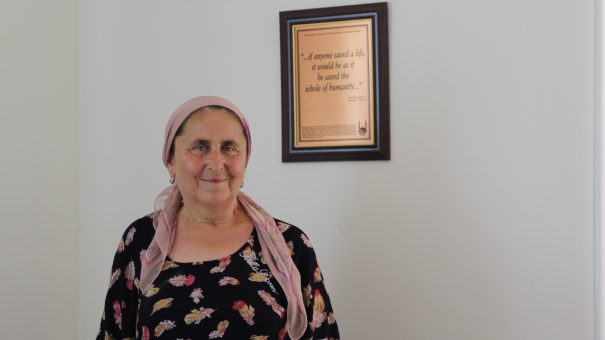
60-year-old Aminata and her family from Falan are receiving one of the 7,700 food packs delivered in Mali. As an agricultural worker, Aminata often yields her own crops and does not need to buy wheat or cereal from shops.

Until this years’ rain shortages resulted in a bad harvest.

With her crops affected, Aminata no longer has enough food procured to cover her family’s requirements. “I had eight children, six of them passed away. I’m now living with their children and my eldest son. I don’t have much financial capacity to plan Ramadan; sometimes I fail to perform fasts due to food shortage,” said Aminata. “My son does his best to bring positive changes to our attitude, but what he earns is limited too and, as a result, some of my grandchildren are now suffering from malnutrition.”


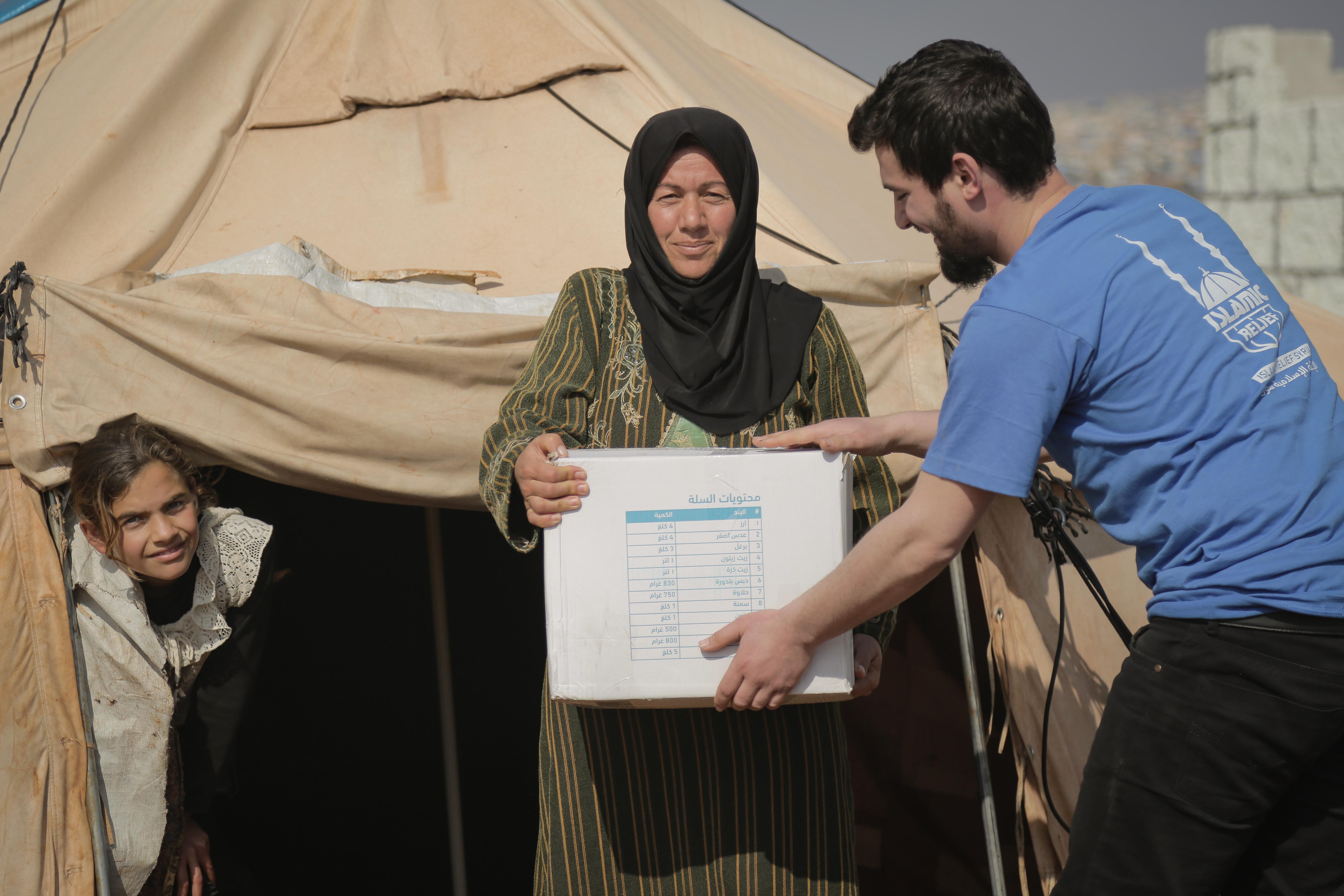
Aminata and her grandchildren stand outside their home with an Islamic Relief food pack.


Living in a rural community that relies heavily on agriculture, Aminata said: “My main challenge is the lack of activities to generate an income in order to support the family’s basic needs in terms of water, food, and health.” Like many countries across the globe, Ramadan is considered to be the most blessed month of the year, but also the most expensive – with food prices much higher than usual. “Despite poverty, we are enduring; the holy month is still a time of joy and happiness.”

Islamic Relief Mali provided Aminata with a food pack containing rice, millet, sugar, vegetable oil and pasta, ensuring that her family remain food-secure during the month of Ramadan. “Thanks to this food package distribution, we do not have to buy food for the rest of the month. We will spend the money we earn on other things, like Eid festivities.”

Approximately 1.5 million people across the globe will receive a Ramadan food pack this year.

Shining the spotlight on children in Somalia and South Sudan

Day of the African Child focuses on children affected by conflict and crisis

Forty years after the Soweto Uprising, many children across Africa are still struggling to find their voice.

Each year the Day of the African Child remembers June 16, 1976, when 10,000 black school children protested in Soweto against the poor quality of their education, demanding their right to be taught in their own language.

Hundreds of the young students were shot and more than 100 people were killed in the protests of the following two weeks.

This year’s theme of ‘Conflict and Crisis in Africa: Protecting all Children’s Rights’ has special significance in Somalia and South Sudan.

Amir Manghali, Islamic Relief’s regional desk co-ordinator, said: “Hundreds of thousands of children here are embroiled in suffering, witnessing the brutality of conflict.

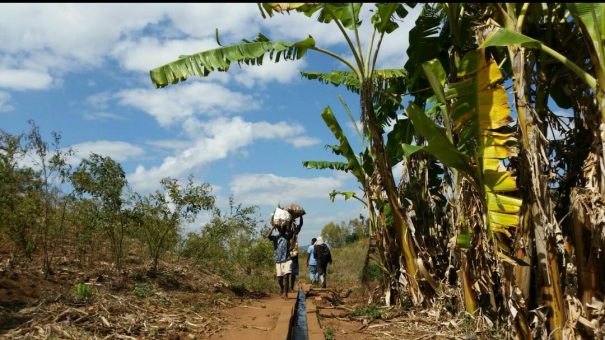
“Today, many families in South Sudan are walking long distances, carrying heavy luggage on their heads, and hoping to get to safety.

“In Somalia, many remain trapped in camps and social injustice continues to manifest itself in the form of poor health facilities, lack of education and poverty.”

He added: “Conflicts are depriving innocent children of their right to food, clean water and education, and leaving girls more vulnerable to rape, assault and sexual exploitation.”

In the capitals of Mogadishu and Juba, more than 32,000 children have received health services from Islamic Relief in camps for internally displaced people.

Our projects in water, sanitation, hygiene and health have enabled 47,500 girls in Somalia and South Sudan to go to school instead of spending long hours collecting water.

Young people kick-start recycling in Chechnya

Islamic Relief pilots waste separation scheme to encourage recycling across Grozny.

Recycling is virtually non-existent in Chechnya, but Islamic Relief has been running a pilot scheme to encourage people to separate their waste.

While countries like Austria and Germany are recycling 60% of their rubbish, and the UK and USA recycle around 40%, in Russia only five per cent of rubbish is currently being recycled.

And in Chechnya recycling has made barely a dent in the waste stream.

To raise awareness, Islamic Relief rolled out separate waste containers for plastic bottles and metal cans across Grozny, while running collections for paper and film.

The scheme is part of the wider scheme started in July 2015 to empower vulnerable young people through education and income generation projects.

Money raised through the recycling scheme has been used to repair the project training centre.

The programme has now been applauded by the Chechen Environmental Ministry which held an event in Grozny Arboretum on World Environment Day, awarding certificates and letters of thanks to youth activists for their work.

Selima Salamova, Islamic Relief’s programme manager, said: “Separate waste collection saves power, provides cheap raw materials for industry and reduces the harm we inflict on the environment that will last even longer than us.

“It also saves natural resources and creates jobs.

“It will take between 200 and 500 years for most of the waste that’s piled up in landfill and in the sea to decompose, but one tonne of waste collected separately saves 13 trees, 32 litres of drinkable water and 2.6 barrels of oil.

“The young people who have participated in this campaign should be at the forefront of future waste disposal practices.”

Emergency food aid needed as households in Somalia cut off by floods

Emergency food distributions are planned where floods have cut off people in remote villages.

Islamic Relief is one of the few INGOs that has been able to access the most hard-to-reach areas on the outskirts of flooded Beledweyne town on the Ethiopian border (200 miles north of Mogadishu), with our field staff using a tractor and “improvised canoes” to get to stranded people.

Aid workers have reported that some families are living on rooftops.

The government has confirmed that around 70,000 people have been displaced so far, with teams on the ground stressing that the number is increasing day-by-day.

Farming communities, consisting mainly of minority clans in the area, are the worst affected with fears that flooded fields will lead to a serious scarcity of food in coming days.

Sixteen deaths have already been confirmed, with an outbreak of diarrhoea believed to be responsible for the deaths of 15 children and one older person.

Amir Manghali, Islamic Relief’s regional desk co-ordinator in Somalia, said: “People have not been able to have a decent burial because there is no dry ground where they can be buried.

“This is a desperate situation.”

He added: “There are problems with sanitation as there are now no toilets or latrines in this area.

“Most have been flooded and the water that people are using to drink and wash with is the same water from the latrine.

“The water is muddy, dirty and smelly and this is the water people are drinking on a daily basis.

“With a lot of stagnant water around there are now fears of a malaria outbreak, so in the coming days it’s going to be really hard for people here to survive in these conditions.”

The Islamic Relief team in Somalia is now working on an urgent response, delivering 1,000 food packs to feed 6,000-7,000 people in the most vulnerable, hard-to-reach households, but this supply will only be enough to last 10-11 days.

Islamic Relief began working in Somalia in 2006, providing Ramadan food parcels and Qurbani meat to poor families in the Puntland region. Our country office is in Mogadishu, with other field offices in Garowe (Puntland) and Hargeisa (Somaliland).

Islamic Relief wins Leadership Award at the 3G Awards

Naser Haghamed accepts the Leadership Award for Social Sector & Philanthropy on behalf of the Islamic Relief family.

Naser said: “I am honoured and delighted to receive this award on behalf of Islamic Relief. However, I would like to dedicate this to the children of Syria.”

Global Good Governance Awards, popularly known as ‘3G Awards,’ are presented to governments, corporates and non-governmental organisations (NGOs) for excellence in transparency, good governance and social responsibility. The award was presented by Cambridge-IFA at a ceremony that took place in Istanbul on Friday 27 May.

“This award honours excellence in the development of society through exceptional generosity and long-term commitment of time, expertise and financial or organisational support.” – Cambridge-IFA

Naser’s acceptance speech: