Insiden Kebakaran di Turki Ragut Lapan Nyawa

TURKI, 2 Ogos 2021 – Sekurang-kurangnya lapan maut dalam insiden kebakaran di wilayah selatan Turki.

Antara kawasan yang terlibat dengan bencana ini ialah Antalya, Mersin, Osmaniye, Adana, Kahramanmaras, Mugla, Kirikkale dan Kayseri.

Usaha mengawal kebakaran yang berlaku di 14 kawasan hutan masih diteruskan sementara 57 kawasan lagi sudah berjaya dipadamkan.

Usaha-usaha memadamkan kebakaran dijalankan oleh 4,000 petugas, lima pesawat udara, 45 helikopter, sembilan pesawat dan satu helikopter tanpa jurupandu, 55 kenderaan berat, 680 lori pemadam kebakaran dan satu tangki air.

Selain daripada bantuan daripada pihak kerajaan, banyak pihak lain juga turut serta membantu antaranya ‘Disaster and Emergency Management Presidency’ (AFAD), Persatuan Bulan Sabit Merah di Turki dan juga pasukan mencari dan menyelamat yang lain.

Islamic Relief Turki kini sedang bersiap siaga untuk memberikan bantuan berdasarkan situasi semasa.

Indonesia Facing Worsening Covid-19 Outbreak

INDONESIA, July 30, 2021 – More than 1,000 death tolls were reported in Indonesia since July 16 due to the Covid-19 pandemic.

The numbers are consistently happening every day.

Indonesia reported the highest new Covid cases daily in the world surpasses India and Brazil.

Hospitals in the islands of Java and Bali had to be closed due to a lack of oxygen supply.

To date, more than three million Indonesians have been infected with the virus while the death toll has reached 83,000 people.

Indonesia has been battling a tide of coronavirus infections and deaths driven by the highly contagious Delta variant for the past month.

Less than seven percent of Indonesia’s population has been fully vaccinated.

Islamic Relief Indonesia is still monitoring the situation with help from local authorities and other humanitarian partners.

The most urgent need especially in Jakarta is medical assistance, which is now almost running out of supply.

215 Death due to Catastrophic Flooding in India

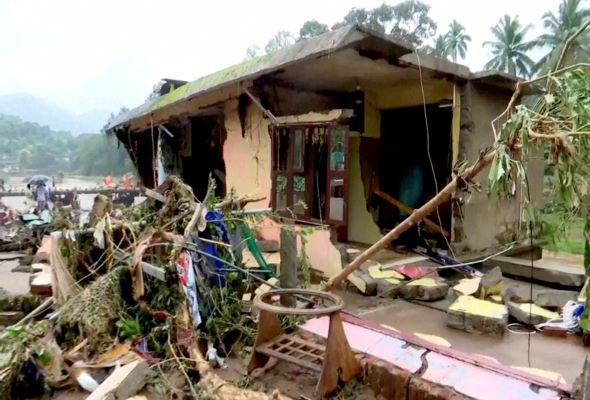
MAHARASHTRA, 27 July 2021 – At least 251 were killed while 50 injured causes by floods and landslides in western districts Maharashtra, India due to heavy rains since 22 July.

Eight Covid-19 patients in Chiplun town hospital, Ratnagiri were killed after floodwaters entered the hospital area.

Ten districts which reported severely affected are Kolhapur, Raigad, Sangli, Satara, Ratnagiri, Thane, Mumbai Suburban, Sindhudurg, Pune, Wardha.

A total of 229,074 people were evacuated to safer locations.

There are 253 relief camps have been set up in Kolhapur and six more in Ratnagiri to accommodate 7,832 affected people.

As reported, there are 3,284 animals died in affected areas while in Sangli district alone, 17,300 livestock are also died.

Units of the Coast Guard, Indian Navy and the Indian Army are concentrated in rescue and relief efforts in Ratnagiri and Raigad districts while the Indian Air Force is concentrated in Chiplun Ratnagiri.

The central and state governments have initiated a substantial response including deploying 34 NDRF (National Disaster Response Force) teams and 4 SDRF (State Disaster Response Force) teams.

Moreover, PM Modi has announced 200,000 INR compensation to the families of the deceased.

The Prime Minister of India, Narendra Modi has announced more than RM11,000 compensation will be given to the families of the deceased while more than RM2,800 compensation will be given to those injured.

Islamic Relief India is still monitoring the situation always ready to help those affected.

150 Affected Families in Sabah Receive COVID-19 Food Pack

Sandakan, 13th July 2021 – Islamic Relief Malaysia has distributed 150 food packs, formula milk, and health kits including face masks and hand sanitizers to 150 stateless families in Refugee Community Settlement Scheme (SPMP), Pulau Jampiras, Sandakan, Sabah in collaboration with National Security Council (MKN).

This initiative is to alleviate the burden of the affected people under the COVID -19 assistance programme.

“Islamic Relief Malaysia provides COVID -19 assistance regardless of any differences.

“This time, we chose Pulau Jampiras because we were informed by MKN that since pandemic COVID -19 happen, this community has never been received any kind of assistance. It may be due to the difficulty to access this area and also because of their stateless status,” said Ramlah Halim, Officer, Islamic Relief Malaysia Programme Division.

It took around 40 minutes to reach this island from Sandakan jetty by boat.

Most of them work as a fisherman. Since pandemic and movement control order (PKP) is being implemented, their income has declined due to the absence of middlemen who come to buy their seafood catch.

“Thanks to Islamic Relief Malaysia and MKN for coming to help us. We feel so blessed because you are willing to help and still care about us,” said one of the beneficiaries.

Let’s pray that we will continue to keep going to face this pandemic and let’s take this opportunity to be more generous towards those affected so they are no one left behind.

Syria is Still Under Attack

Idleb, July 7th, 2021- At least 31 people have died since early June due to attacks that targeted civilian infrastructure in southern Idlib, including a hospital, displacement camp school, and a civil defence headquarters.

On June 23rd, artillery attacks were targeted many towns in Idleb and western Aleppo.

One of the places targeted is Jabal Al Zawiyah, meanwhile, the Turkish observation post in Kansafra city was most affected. Two Turkish soldiers have injured.

The artillery attack also hit a cemetery area in Afes, eastern Idleb which affect several mourners have died and injured.

On June 24th, an artillery attack began early in the morning and targeted the western Aleppo countryside.

There is one boy in Al Atareb who was reported injured by an artillery shell meanwhile people in Taqad, Tadil, and Kafr Taal become panic due to the bombardment.

Currently, Islamic Relief is still monitoring the situation in Syria and if the war continues, we will start to deliver humanitarian aid such as shelter, non -food items (NFIs), and food for the displaced families.

Overcoming disability in a refugee camp

For people with disabilities, fleeing conflict and arriving in a refugee camp can be an even more difficult experience. Islamic Relief’s Aya El Fatih talks to one Ethiopian refugee in Sudan about the challenges she has faced:

When conflict erupted in the Tigray region of Ethiopia in November 2020, tens of thousands of people were left with no choice but to seek refuge in neighbouring Sudan.

Among these refugees is 30-year-old Mulu, who was forced to flee when the war reached her hometown. Mulu has a life-long medical condition making her legs bowed and difficult for her to walk, so her husband had to carry her in his arms as they fled.

Loss and fear

“I saw bombs exploding and people dying all over the place,” Mulu says. “I was very scared, my husband’s friends were killed, it was horrific. I hope I never have to relive that feeling.”

“When the bombs started exploding, everyone ran in separate directions. That’s when we got lost.”

Mulu’s father was killed and she hasn’t been able to contact other members of her family since then.

“I barely sleep. I think about them all the time, whether they are dead or alive. Leaving my family behind is unsettling; I am disabled but I worry about them more than I worry about myself.”

Life in the camp

Mulu has now settled in a tent in Um Rakuba refugee camp in eastern Sudan, which is home to more than 20,000 Ethiopian refugees.

She doesn’t have children, but has taken a 16-year-old lost child under her care. She says she sympathises with lost children more than anyone as she has lost contact with her family.

On a hot sunny day, we met her as she prepares Injera (traditional Ethiopian flatbread) on a clay stove by pouring the batter rapidly in a spiral manner from the outside inwards. She leaves it for a few minutes on a griddle until it is cooked.

The rich smell of freshly baked Injera soon leaves everyone hungry. The Ethiopian refugees have made clay stoves themselves as Injera is a big part of their diet.

Mulu says, “I am well settled here, I get food and water.”

Islamic Relief and other humanitarian agencies have provided aid such as food, water and sanitation. But there are still many challenges, especially for a woman who struggles to walk.

“I fall on the ground if I walk for long distances,” says Mulu. “It is also hard for me to use latrines, sometimes I fall into the pit.”

Islamic Relief has delivered aid such as hygiene kits directly to Mulu’s tent because she cannot  stand for long in a queue.

“I sincerely thank Islamic Relief for the house-to-house delivery, I can’t thank them enough,” she says.

According to Elsadig Elnour, Islamic Relief Sudan’s Country Director, “At Islamic Relief, we give special attention to people with a disability, the elderly, and pregnant women. We don’t want them to worry about not receiving aid because they can’t reach the distribution points.

“The house-to-house aid distribution not only ensures people with disabilities are included and better protected from being hurt or puhsed in crowds, but is also a preventive measure against Covid-19.”

Humanitarian response

The crisis in Tigray continues and the need for humanitarian assistance is ever-rising.

Islamic Relief is providing aid in Tigray itself and to refugees in Sudan, which is now hosting more than 80,000 refugees from Tigray in three camps: Um-Rakuba, Al Tunaydbah, and Hamdayet.

Islamic Relief’s response in these camps includes providing food, water, sanitation and hygiene, education, and street lighting systems. We also provide other items such as plastic sheeting for tents, mosquito nets, jerrycans for carrying water, soap, toothpaste, sanitary pads and face masks to protect against Covid-19. So far we have provided aid to around 30,000 refugees.

Islamic Relief has constructed more than 60 latrines and 30 washing facilities at Um-Rakuba and Al Tunaydbah Camp, and is working to construct classrooms and provide secondary education for refugees through funding from Education Cannot Wait (ECW). We have installed solar-powered street lights in Al Tunaydbah, to improve safety and protect refugees at night.

Mulu herself received a hygiene kit and kitchen utensils from Islamic Relief. She wishes for peace and hopes to go back to her country, but in the meantime is relying on humanitarian aid.

“I don’t have clothes, I only have the clothes I am wearing now, as you can see they are torn,” she says. “I need a mobile phone to get in touch with my family and a flashlight to be able to move in the dark. I also need a thicker sleeping mat given my disability.”