Aleppo’s bereaved can’t even mourn, says Islamic Relief

Intensive airstrikes in Aleppo leave 184 dead

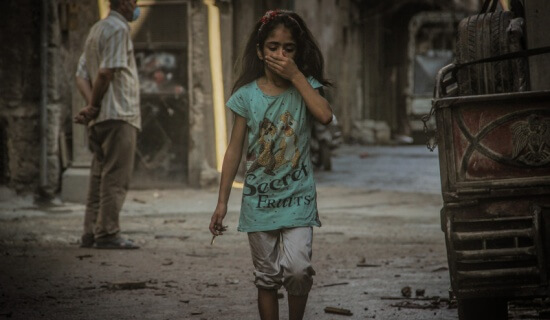
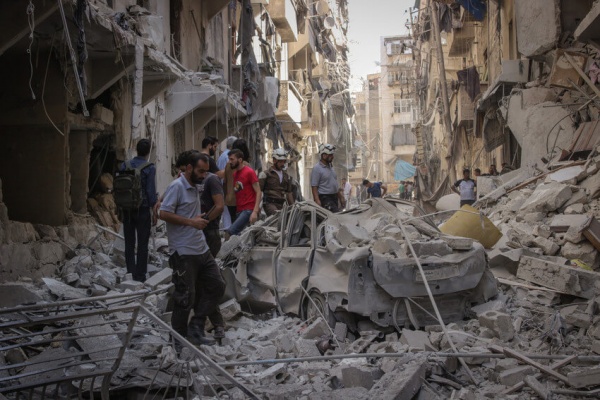
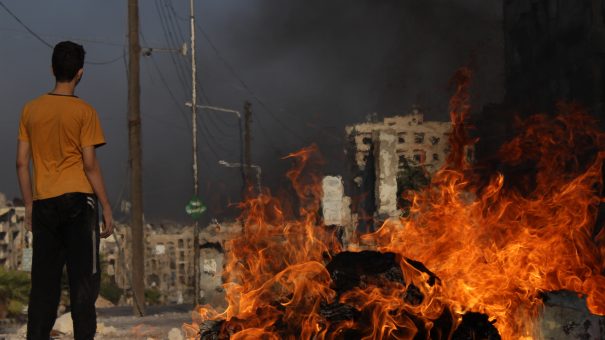
Two days of intensive airstrikes in Aleppo has left 184 people dead in the last 48 hours and prompted a desperate plea from one of Islamic Relief Syria’s key aid workers on the ground to pause hostilities and allow aid workers to protect civilians.

“It’s not even possible for people to mourn their dead properly, as condolence gatherings have been targeted. Even Friday prayers were cancelled in Aleppo yesterday as people are too scared to gather together, at the time they need it most,” says Islamic Relief aid worker Ahmed Mahmoud (name changed to protect identity).


At least eight entire families have been killed

He adds: “Following the breakdown of the latest ceasefire, the situation on the ground inside Aleppo has dramatically worsened. In the last 48 hours there have been hundreds of airstrikes in Aleppo alone, and at least 184 people have been killed. This includes eight-day-old Mustafa Hamdan from Al-Ferdoas, whose death was caused by shrapnel from an airstrike.”
“At least eight entire families have been killed, including a nurse, a midwife and their children. Water is out completely. There are other water sources from wells, but these are mostly shallow and the water is unsafe for consumption. People can’t mourn their dead, as it’s impossible to gather for condolences, these gatherings have been targets of air strikes. Islamic Relief is on the ground right now as this catastrophe is unfolding. We need those who are in a position of influence to take immediate action to protect innocent civilians and to allow the safe passage of vital aid, food and medical supplies. We are currently unable to deliver this vital aid due to nearly 300,000 people in Eastern Aleppo being completely besieged.”

Islamic Relief’s Ahmed Mahmoud discusses current situation in #Aleppo in this hard-hitting interview on BBC Radio 5 live

https://soundcloud.com/islamicreliefuk/bbc-radio-f…

Our work inside Syria continues

Please donate to our mySEDEKAH – SaveSyria, and with your support we can provide emergency relief to those in need.

Community Development Programme in Tumpat Islands

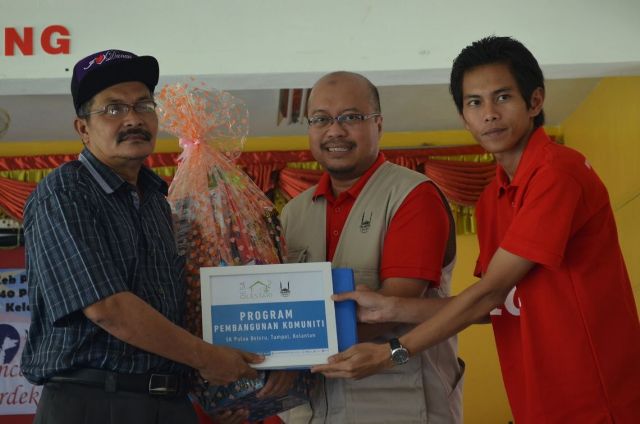
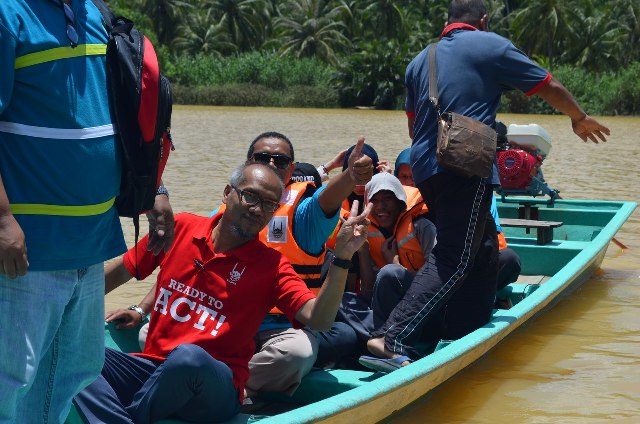
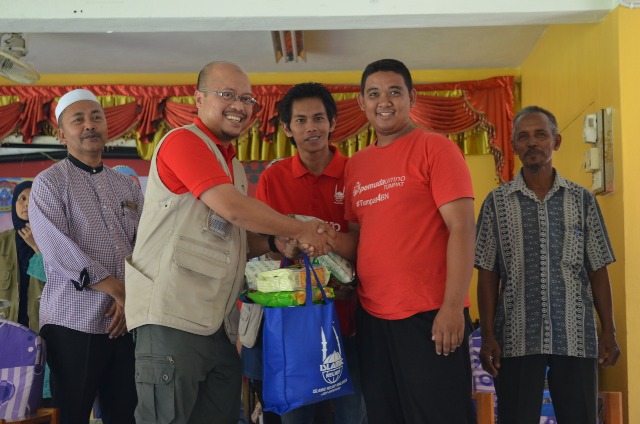
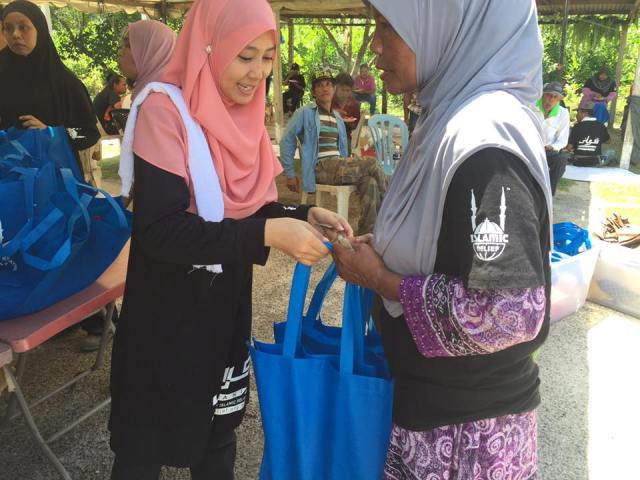
TUMPAT, Sept. 24th 2016 – A Community Development Program was successfully organized at Sekolah Kebangsaan Pulau Beluru, Palekbang which IRM team managed to deliver basic food packs to 550 families from Beluru Island and other islands as a preparation for the flood.

The Program began with a talk session on “The Importance of Religious Education at Home” by Tuan Hj. Hisham bin Shaari, an invited speaker from the Tumpat District Education Office. Then, followed by a brief speech from En. Kamarul Halim Sakrani, Head of Relief & Program and the program ended with the food pack distribution.

With a concept of “Touch & Stay”, IRM plans to provide a sustainable assistance for the community in the future. After the program finished, we visited the neighbouring islands such as the Seratus Island, Che Soh Island, Tongkang Island, Pantai Suri Island, Sri Tanjung Island and Haji Nik Mat Bridge.

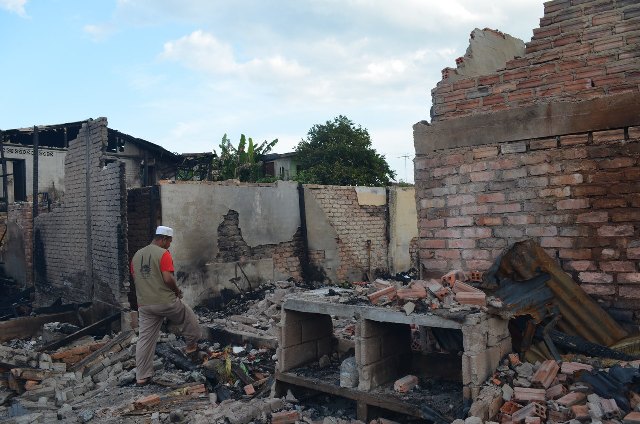
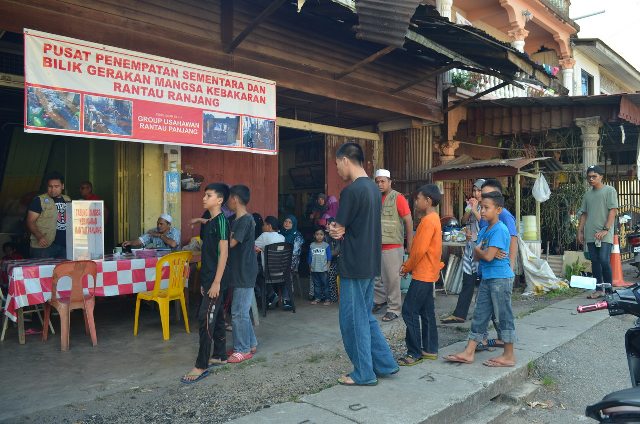
Besides, we visited the evacuation center for fire victims which is operated by Bilik Gerakan Kecemasan (BGK) IRM in Rantau Panjang. There was a sharing session about the recent fire tragedy occurred in early September, which recorded a total of 15 families had ‘lost everything’.


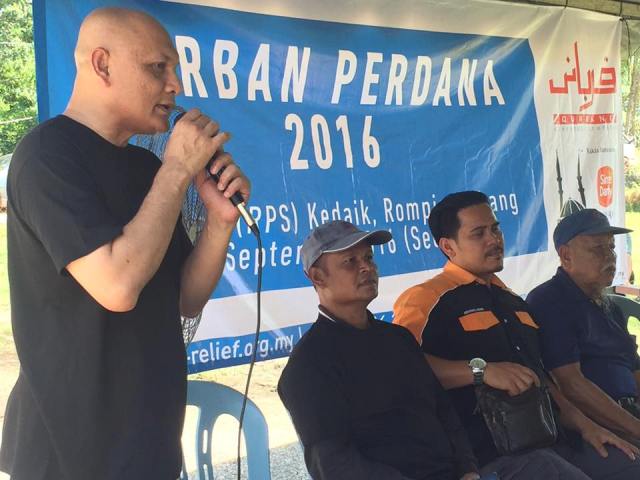
Qurban Perdana 2016

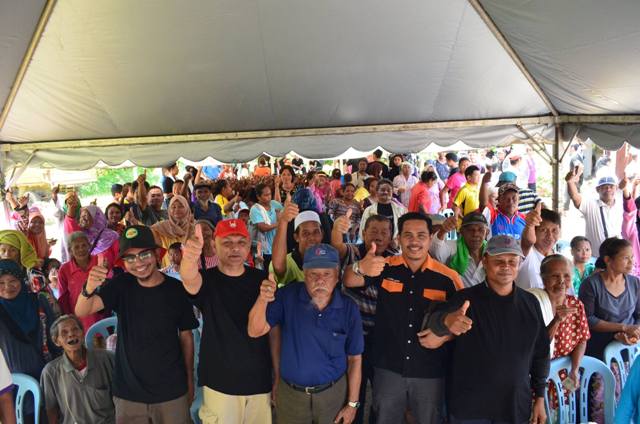
ROMPIN, Sept. 13th 2016 – An aboriginal people from Kampung Rancangan Pengumpulan Semula (RPS) Kedaik were celebrated in Qurban Perdana Program organised by Islamic Relief Malaysia (IRM).

The three cows sponsored by Sime Darby Foundation (YSD) were slaughtered in this program while the other three cows were slaughtered at Rumah Anak Yatim Miskin Yayasan Annur Maisarah, Chemor, Perak.

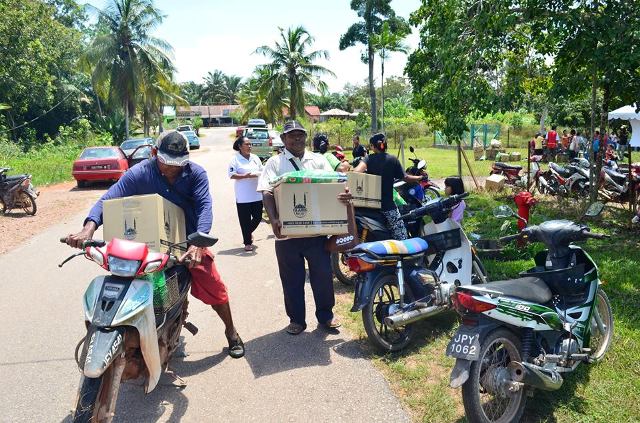
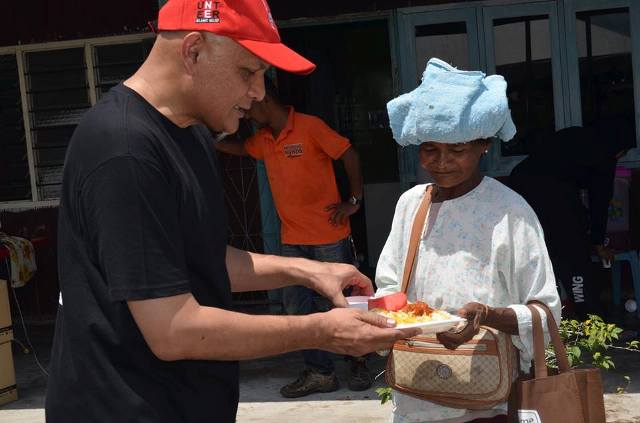
A total of 200 beneficiaries from poor and destitute including orphans, senior citizens, chronic illness patients, disabled, single mothers and others were also receiving food packs with Qurbani meats.

Other than slaughtering, the programme was also featuring activities including takbir and light talks by invited speakers, Ustaz Asyraf, psychosocial sessions with the Orang Asli community children as well as cutting, skinning and weighting the Qurban meats.

For this ‘Qurbani Across Borders 2016’ campaign, IRM has helped the beneficiaries in 28 countries including Palestine, Syria and Malaysia.


What is life like for aid workers in Syria?

An Islamic Relief worker describes the difficulties on the ground.

After an air strike hit a convoy of relief trucks near Aleppo this week Islamic Relief’s field coordinator, Yousef Abdollah, has been speaking with the BBC’s World Service.

The only person speaking from Syria, Abdollah joined other NGOs for a panel discussion on the programme BBC World Have Your Say.

He spoke about what it is like to be an aid worker within Syria and the challenges around planning, access and safety. He also spoke about working with local authorities on the ground.

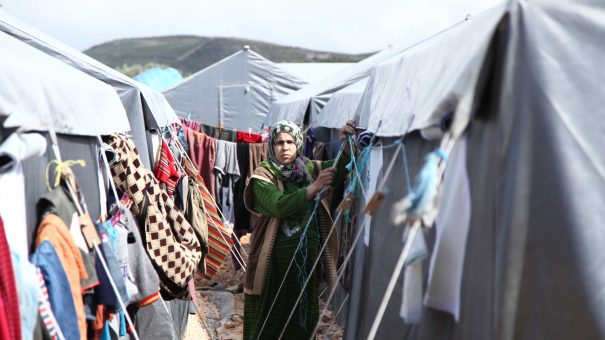
Describing the situation for civilians in Aleppo, he said: “There are almost 400,000 civilians stuck inside the city without any basic infrastructure – no food, no electricity, no water, no communication.

“There is frustration amongst the civilians due to aid being unable to be delivered.”

You can listen to the programme here.

Audio Player

Download File

Following the incident on Monday, which killed at least one aid worker and around 20 civilians, the United Nations suspended aid convoys across Syria.

Just a day later a second incident saw Islamic Relief’s partner the Union of Medical Care and Relief Organizations (UOSSM) hit, with five medical workers killed.

Islamic Relief’s planned shipment of food parcels in Aleppo has been suspended and our team in Syria has increased security precautions following the end of the ceasefire.

Annual Report 2015

Islamic Relief Worldwide’s annual report for 2015 has been published today, detailing our income, expenditure and the projects we undertook to help 8.3 million people across the globe.


2015 was a complex and challenging year, one in which we witnessed the worst refugee crisis since the Second World War, while conflict continued to fracture families, natural disasters devastated communities and millions of people still struggled in poverty. For Islamic Relief, these challenges only strengthened our determination to extend our global presence and assist those in dire need of our help.

Our total income reached £105.6 million, with programme expenditures increasing by 25% to £100.3 million. As 50% of our work focused on empowering communities, we delivered sustainable development and educational projects to make a permanent difference in some of the world’s poorest communities. More than 525,000 people worldwide are now better able to cope with the impacts of climate change thanks to disaster-resilient homes, weather-tolerant seeds and livelihoods training. Our pioneering multi-national Islamic microfinance programme now enables nearly 15,000 entrepreneurs in a dozen countries to lift themselves out of poverty and 48,000 orphans are currently benefiting from our sponsorship programme.

As one of the first respondents to humanitarian disasters, we delivered swift emergency aid as soon as earthquakes hit Pakistan, Afghanistan and Nepal, and when flood waters swept into homes in the United Kingdom. By working in areas that many other organisations cannot reach, we are able to reach even more people in need. As the war in Syria entered its fourth year, we reached a staggering four million vulnerable people and our local presence in Yemen meant that when violence erupted, we were able to respond rapidly and provide 1.3 million people with food rations and access to clean drinking water.

In 2015, we pushed for a safer, fairer world for all by brokering the first Islamic Declaration on Climate Change and published our first gender justice policy. We also introduced a new General Assembly to better reflect our international position in the sector. Together with the Board of Trustees, the General Assembly will promote funding for long-term programmes and push for productive partnerships with aid agencies and institutions across the globe. This, we believe, will enable us to continue growing and making a lasting change in the fight against poverty and suffering.

Without our dedicated staff, volunteers and supporters none of our work would be possible, and so we pass on our sincerest thanks to the public, multilateral and governmental partners for their generosity. We are truly humbled by the trust placed in us to make a difference and, together, we will continue delivering impactful programmes that empower those that we exist to serve.


Download/View Publication

Islamic Relief is an independent humanitarian and development organisation that has been working to fight poverty and suffering for over 32 years.

UN Refugee Summit: Islamic Relief’s key messages

The UN Summit for Refugees and Migrants (read our quick guide here) is a watershed moment for refugees all over the world. Here and now, heads of state must commit to the protection of refugees and to the establishment of a more humane, coordinated and predictable response to hosting refugees and supporting their long-term resilience.

We want the voices of refugees to be heard. We call on all nations to make welcoming forced migrants and protecting their dignity the central tenets of their response to the global forced migration crisis. Specifically, we ask states attending the summit to commit to the following:


Welcoming

  1. Ratify and uphold the 1951 Refugee Convention and take their fair share of refugees to ensure collective resettlement of at least 10% of refugees globally.
  2. Ensure the provision of safe and legal routes for people seeking refuge and asylum, including increased support for family reunification.
  3. End xenophobic language and policies towards forced migrants and partner with local civil society (including faith-based organisations) to facilitate effective integration of refugees within host communities.
  4. Increase funding for the global refugee response appeal by 30% from $10 billion in 2015 to $13 billion in 2016.

Dignity and protection

  1. Increase support for safe and sustainable livelihoods, including the provision of work permits for refugees and regional job creation strategies for nations hosting high levels of refugees
  2. A sustainable, comprehensive response by governments and the international community with increased resources for the systematic creation of safe and welcoming spaces which are inclusive, flexible, appropriate, participatory and protective. A particular focus should go on childhood settings, schools, and other formal and non-formal learning spaces, with emphasis on the most vulnerable and disadvantaged, including girls and women, and those with disabilities
  3. Increase funding for inclusive refugee education for all 3.6 million refugee children out of school and promote vocational training.
  4. Increase funding and diversify partnerships to address the psycho-social and spiritual needs of refugees.

What does Islam say about refugees and forced migrants?

Islam has a rich heritage of forced migrant protection, stemming from the original teachings of the Qur’an and examples from the lives of Islamic prophets. Central to the Islamic tradition are the concepts of welcoming and dignity.

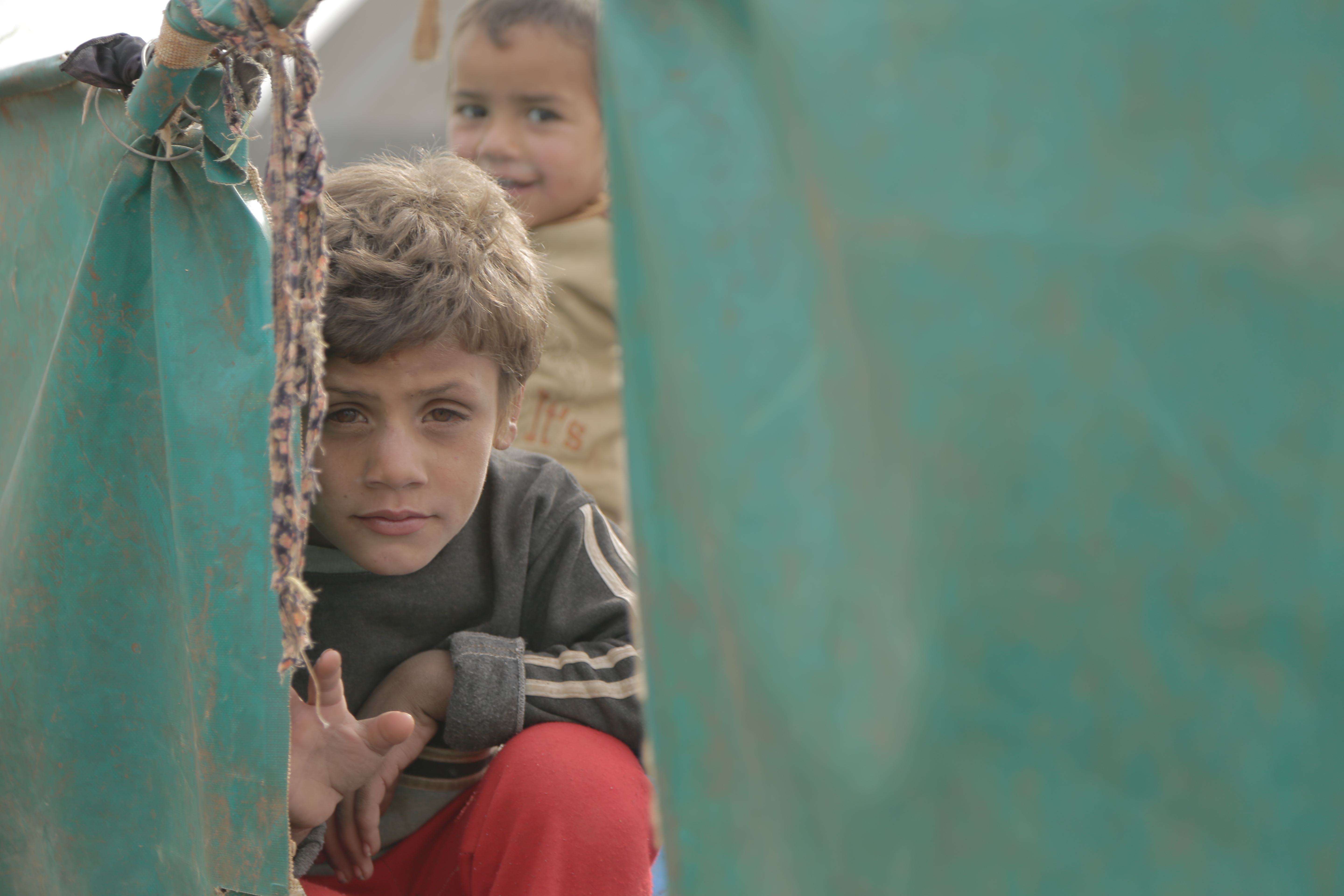
rs44251_imgl5963

Welcoming

The Qur’an calls on humankind to fulfil the role of protectors and helpers to “those oppressed men, women and children, who cry out, ‘Lord, rescue us from this town where people are oppressors!’” (Qur’an 4:75), and promises that those escaping persecution will find “many a refuge and a great plenty in the earth” (Qur’an 4:99).

Islamic teachings emphasise that refuge is the divine right of the persecuted, and humankind has the responsibility to provide shelter and protection to those in need, wherever they seek it.


The world’s six richest nations are hosting less than 9% of the planet’s 65 million refugees


Unfortunately the international response to the forced migration crisis has been patchy and in many cases nation states have failed to meet their basic commitments to refugees under international law. According to UNHCR figures, the world’s six richest nations (by the World Bank’s GDP ranking) are hosting less than 9% of the planet’s 65 million refugees, and many are demonstrating a strong reluctance to open their borders to refugees by exaggerating threats to security, culture and economic stability.

Many refugees currently reside in countries that have failed to ratify the Refugee Convention and millions each year continue to be born stateless without access to basic human rights.

Dignity

Dignity is considered a central aspect of human identity, as the Qur’an speaks of how God“honoured the children of Adam” (Qur’an 17:70). Protecting human dignity is therefore a critical responsibility. Rather than treating forced migrants as social and economic burdens, the Qur’an commends those who “show love for those who migrated to them” and “give [the migrants] preference over themselves even if [the hosts] too are poor” (Qur’an 59:9).


ir-digi-children-in-al-qaim-camp


Forced migrants are to be regarded as brothers and sisters, afforded the same rights and protection as all citizens, and should be encouraged to attain independence and self-sufficiency in their new communities.

Many of the world’s refugees are hosted by countries which lack the resources or legal frameworks to adequately meet the needs of forced migrants – leaving them vulnerable to violence, exploitation and inhumane living conditions. Ensuring refugees have access to education and sustainable livelihoods is essential for their long-term resilience.

Education builds knowledge and skills for self-reliance and resilience and can contribute to peace and security. Children in school are better protected from trafficking, illegal adoption, early and forced marriage, sexual exploitation and forced labour. Among refugees, only 50% of children are in primary school and only 25% of adolescents are in secondary school (according to UNESCO and UNHCR). National education plans and financial resources are needed to widen access to formal education and enable flexible forms of education and vocational training.


Among refugees, only 50% of children are in primary school and only 25% of adolescents are in secondary school


Opportunities for livelihoods are limited. Most refugees cannot work legally in their host country due to a lack of provision of work permits by the state. Where work permits are provided they are normally restricted to unskilled work and see forced migrants paid significantly less than citizens. For example, according to the United Nations, rising costs and irregularity of employment in Iraq mean 0% of refugee families there are able to meet their basic needs, with livelihoods programmes being one of the most underfunded areas by donors.


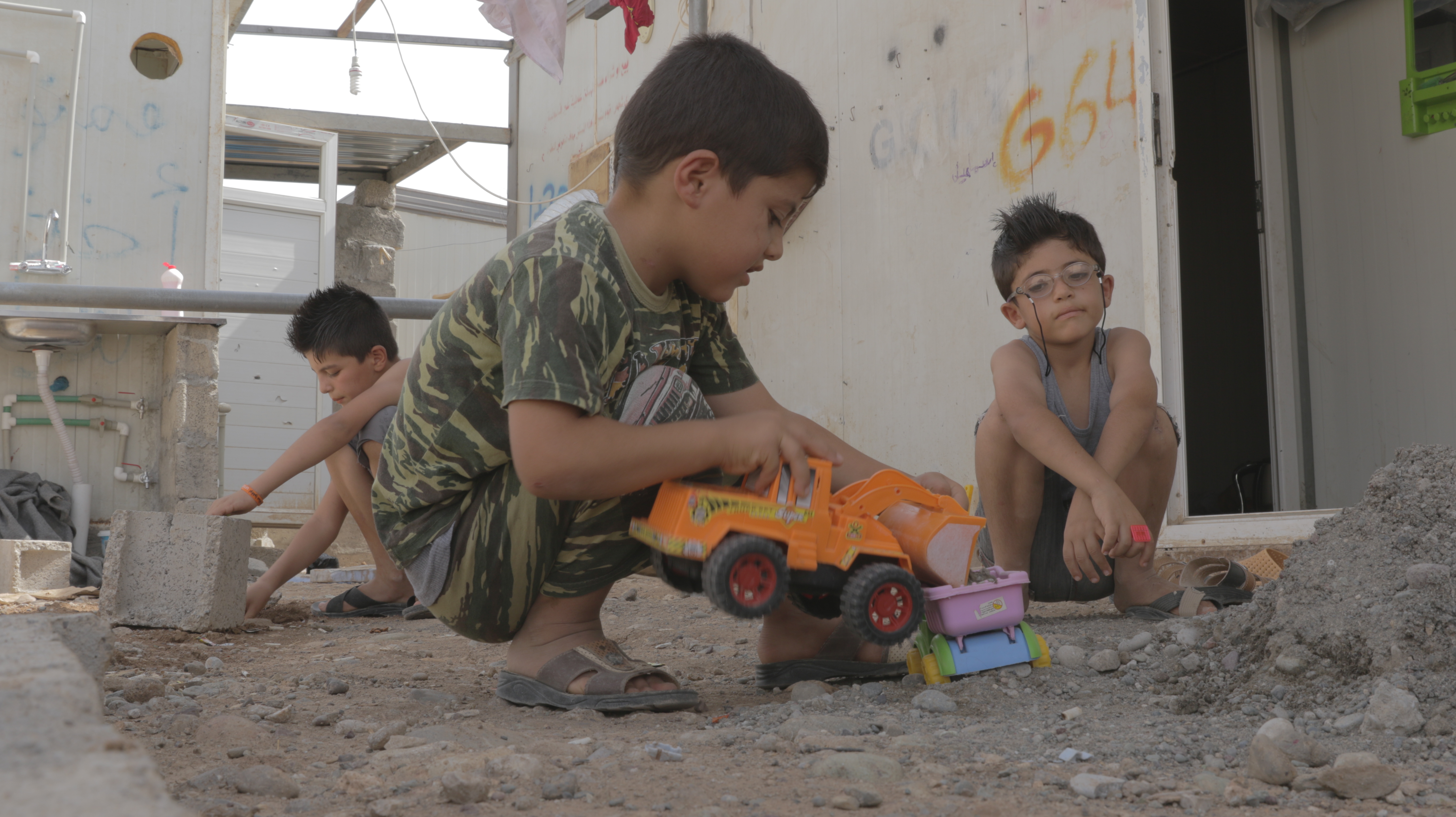
boys-playing-with-toys-in-basirma-camp


There is also a lack of psycho-social support services available for refugees who have been through traumatic circumstances. Migrant women and girls face specific threats including sexual and gender based violence due to existing gender inequalities that are exacerbated by the crisis, displacement and conflict. Women and girls of older age and disability have an increased risk of violence and exploitation. A study by IASC group on Reproductive Health in Crisis found that access to sexual and reproductive health for displaced women are below minimum standards or absent. Strong gender based violence response programmes to address the need of survivors complemented with strong prevention programming are scarce.