This World Refugee Day, we are recognising the strength and courage of refugees like Hassan

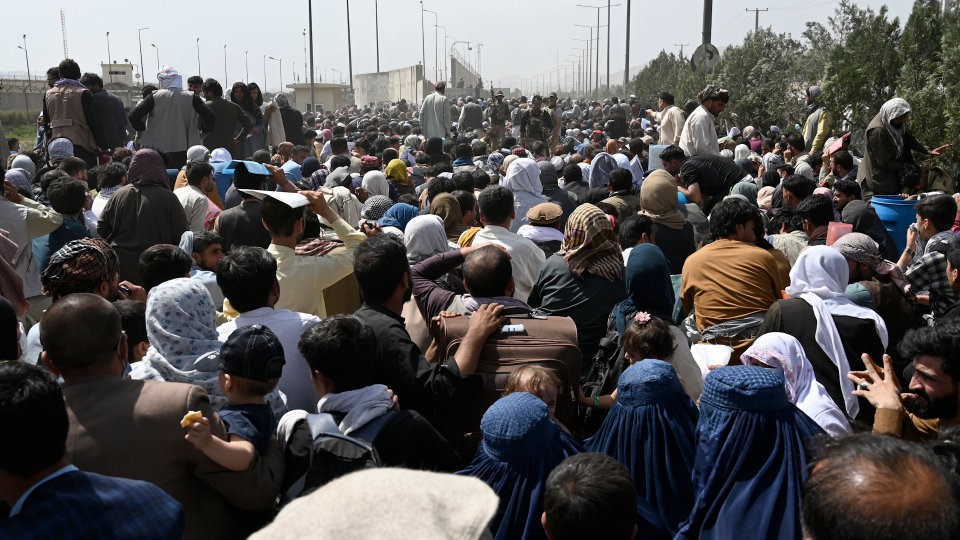
Never before has the world recognised a World Refugee Day in which so many people are displaced. Largely driven by conflict, the number of refugees has doubled in the past 10 years, from 41 million in 2010 to nearly 80 million today. Today, Islamic Relief shines a light on the strength and courage those forced to flee in search of safety. We draw inspiration from people like Hassan.

Military clashes in the Ethiopian region of Tigray have been ongoing for months, with no end in sight. More than 70,000 people have fled to neighbouring Sudan. Some on foot, others by vehicle or by boat across the border river. Due to Tigray being partially closed, making access difficult, people arrived through border crossings that can only be reached via dirt or unpaved roads.

They arrive exhausted after walking long distances, carrying very few belongings.

Hassan and his family were one of the first people to reach the camp after fleeing their hometown, Humara, to find safety in Sudan.

Everything left behind

“We walked for 3 days before we got to the border,” Hassan says, pointing to his parched, bare feet. “Everyone was scared. Our money, our animals, our houses, our clothes: we have lost everything.”

Hassan told us how he and many others had to quickly flee the violence, and how they saw many of their friends and neighbours die.

“Before the conflict, we had properties, businesses, we didn’t worry about tomorrow, but that all changed when the violence started. I am not sure if anything or anyone is still there, but thankfully my mother and siblings are safely on the other side of the country”.

Hassan counts himself among the lucky ones, as he used to live and work in Sudan and had connections from his time here.

“It was very rough at first. When we first arrived there was no aid, we had to eat what we were offered. For many that meant they had to go hungry as the food was so different from what they were used to.

“Things gradually started to change when more aid came in. My friends and acquaintances from Sudan were a great support system during those uncertain times as I was able to lean on them when things got tough.”

Heart-breaking loss

Amongst the chaos, Hassan and his pregnant wife were struck by more tragedy. He is emotional when he speaks about his loss.

“My wife and I were so happy when we found out she was pregnant as we have been trying for so long. When we fled Tigray she was 2 months pregnant. When we reached Hamdayet we were very thirsty. We hadn’t had water for days, we were walking for so long and my wife was so tired, it took a toll on her health.

“So, when she lost the baby, it was so extremely hard for us. This conflict took away so much.”

Building new lives together

They had been living in the camp for some time before Hassan felt able to start to explore opportunities within the camp, which shelters mostly Christian families.

A quiet and knowledgeable man, he was approached by the community to be one of the two main leaders of the camp. He is a “peace leader”, which involves dealing with disputes and supporting reconciliation, as well as helping organise the camp, registration of new arrivals and rationing.

A Muslim, he says that being nominated as a camp leader reflects the harmony within the camp.

“The majority of Tigray people in the camp are Christians, but we don’t differentiate between Muslims and Christians here, we live in peace. Back home my whole life we lived in harmony with Christians, I don’t see any differences between us. This situation has not changed my views, it only reminded me that we are all humans.”

Despite the harsh realities, poignant stories like Hassan’s remind us that ordinary people can work together, form a support system and help guide each other.

The current crisis-disrupted situations in the world can help sharpen our sensitivity and understanding for refugees. Our faith can be a bridge and on this World Refugee Day we encourage many more people to commit themselves to building a humane, pluralistic world with solidarity.

Inspired by our faith, Islamic Relief has been providing emergency assistance to those affected.

We have provided Hassan and his family with shelter, mattresses, blankets, rugs and other essential items. We are helping displaced families and host communities survive a crisis with dignity, find stability in need, and to hold onto hope.

Join us in standing in solidarity with families forced to flee: donate to Islamic Relief to support our work to enable refugees to live dignified lives.

Tragedy and hospitality: Daily life with refugees from Tigray

Islamic Relief’s Aya El Fatih spent a few days with a refugee family in Sudan, to find out how people live after fleeing terrible violence. In their small tent she found stories of loss, resilience, hospitality and hope.

The white tents in Um Rakuba refugee camp are arranged in neat rows as far as the eye can see. Thousands of refugees have fled the violence in the Tigray region of Ethiopia and sought shelter in this sprawling camp in eastern Sudan.

One of the many tents, not far from Islamic Relief’s office, is now home to 35-year-old Akbert and her children.

Tragedy strikes

Back home in Ethiopia, Akbert lived happily with her husband, who was the family’s main breadwinner. But their life changed as the war in Tigray intensified. Her husband was killed and his livestock was stolen. The next day Akbert had to bury his body and start caring for their 7 children on her own.

Thinking of her children’s safety, Akbert decided to flee. “It was God’s will,” she says. “I was worried about what was going to happen to us, whether we were going to live or die.”

Akbert and her children crossed the Blue Nile River and escaped into Sudan, where they were welcomed by local people who helped them ride a tractor the rest of the way to Um Rakuba camp.

Making a new home in the camp

In the camp, Akbert’s 3-year-old daughter, Radyet, is very attached to her mother and follows her around everywhere.

Akbert has had to cope with new surroundings and feed her children with whatever is available. “I was very scared when I first came here,” she says. “I worry about my children when I run out of food, how can I explain it to them? We are adults so we understand the situation, but they are only children. The water is also scarce in the camp. I have to go a long way to get water.”

When she wakes up every morning, she cooks food for her children and sends them to school, but she faces difficulty cooking because she doesn’t always have firewood.

With her neighbours, Akbert shares a clay stove where she makes Injera, traditional Ethiopian flatbread, which is an integral part of their diet and a taste of the home they left behind. The refugees have made the clay stoves themselves so they can make Injera.

Even though her tent is a small place for 8 people, Akbert manages to keep it organised and gives it warmth. She throws some incense (commonly used aromatic wood in Ethiopian and Sudanese culture) into flaming coals. A beautiful scent soon saturates the tent as a wisp of smoke rises from the hot coals. The smell often tempts neighbours to join Akbert for coffee in her tent.

Hospitality and strong coffee

She starts preparing the coffee by roasting the beans in a fryer, stirring until they turn a dark rich colour. With a mortar and pestle she then grinds the roasted beans into a powder, which she adds to boiling water.

She hosts her neighbours by pouring the strong-smelling coffee into small porcelain cups and serving it with popcorn in her warm, incense-saturated tent.

People in the camp do not have much, but hospitality is a big part of local culture and they share what they have with each other.

A birthday in the camp

Her neighbours and her late husband’s friends also came to celebrate the first birthday of her son, Tamasgn. Since her husband passed away, his friends have kept Akbert company.

Many refugees had to leave everything behind when they fled, including clothes. For her son’s birthday Akbert wore a yellow scarf and a half-sleeve maxi pink dress, which she has worn continuously for several days.

Faith is a big part of Akbert’s life. She wears a cross on her neck and goes to church 3 times a week in the camp. At the birthday celebration, Akbert and her family stood reverently around the holy bread while a priest recited prayers. He then attached the bread to Tamsagn’s body, blessed him and cut the bread, which was eaten by everyone present.

“This is part of our culture,” says the priest. “This ritual is usually performed on a child’s first birthday so that he or she grows faster.”

A tearful celebration

Tamasgn’s birthday coincided with a day of national celebrations. In the camp, refugees gathered for morning prayers in high spirits, walking around greeting everyone they meet. Music played loudly and people stood on tractors holding flags and dancing.

Children were happiest of all, with flags painted on their faces.

Akbert rushed inside to get the bread which was blessed for Tamasgn’s birthday, then shared it around. The people on the tractor hailed and raised the bread high above their heads. Akbert tearfully joined in the dancing, as she remembered her husband; the bread she donated was for his soul.

For Akbert and many other refugees in the camp, such celebrations can be a way to temporarily detach themselves from tragic memories.

Humanitarian aid

Since violence broke out in Tigray in November 2020, more than 80,000 Ethiopian refugees have fled to Sudan.

Some refugees are able to make a small living by selling vegetables and sugar in the market, and Akbert plans to sell a tractor to raise money to feed her children.

However, the need for humanitarian assistance is greater than ever.

Islamic Relief is working in Um Rakuba and other camps in Gedaref state in eastern Sudan, as well as responding inside Tigray itself. We have provided around 30,000 refugees with some form of assistance including food, water, sanitation and hygiene, education, and a new solar-powered lighting system to keep people safe in the camp at night.

Islamic Relief has constructed around 50 latrines and 30 washing facilities in the camps, and is constructing classrooms through support from Education Cannot Wait.

But families like Akbert’s need more support so they can live a dignified life.

“My children are orphans,” she says. “I pray that they don’t get hungry or sick. I thank Islamic Relief and the government of Sudan for the support so far.”

Islamic Relief has been responding to forced migration crises since we were founded in 1984. We are now working to meet the needs of refugees, internally displaced people, asylum seekers and returnees in affected countries around the world.

Families like Akbert receive live-saving aid from Islamic Relief, including psychological support, healthcare, food and education.

We urgently need your help to continue this vital work: please donate to support our crucial work with refugees and migrants.

200 Flood-Affected Families in Sabah Receive Food Packs and Health Kits

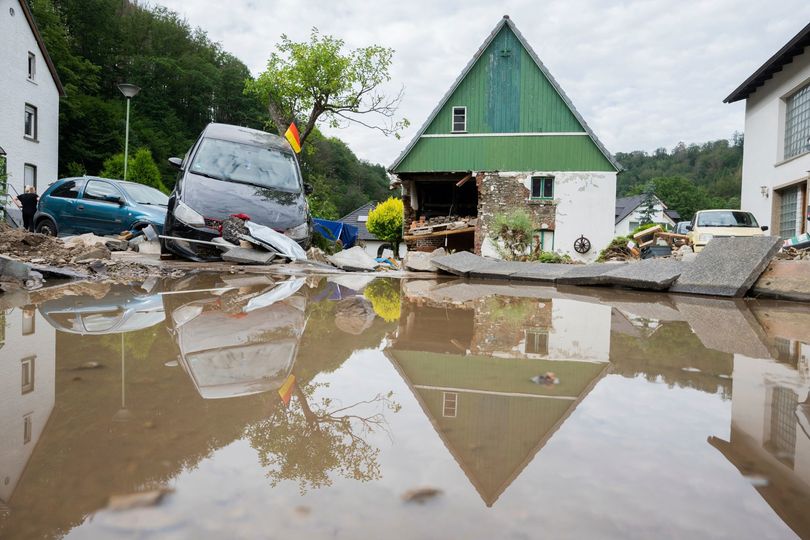
Sabah, 14 June 2021 – A total of 200 families affected by the floods in Kampung Bekalau, Takuli, Kebatu in Beaufort, and Kampung Batu-Batu, Tenom have received donations of food packs, mineral water, and health kits including face masks and hand sanitizers.

The floods were caused by the release of water from the Pangi Hydro Dam and the continuous rainfall.

Assistance is distributed periodically for three days in collaboration with the Malaysian Civil Defense Department (JPAM), the Malaysian Relief Agency (MRA), and the Village Security Development Committee (JPKK).

“This disaster really a challenge. Not only are we facing floods, but the piped water supply system is also cut off. I don’t even know how we’re going to clean the house after this.

“Fortunately, Islamic Relief Malaysia came to send mineral water supplies. Let us children save a supply of water to drink,” said one of the beneficiaries.

Although they have all started returning to their homes, the cleaning work is still interrupted.

“Most of the affected residents we met complained of still not being able to clean their houses and had to wait for the rain to collect water,” said Fathi Ridhwan Saidin, Senior Officer, Islamic Relief Malaysia Programme Division.

Let’s pray that they all continue to keep going to face this situation and be protected from the Covid-19 epidemic that is still spreading in our country.

Thousands killed in Ethiopia’s Tigray conflict

Ethiopia, June 4, 2021 – More than five million Ethiopians are now reported to be facing starvation, more than two million are displaced and tens of thousands have been forced to flee to Sudan following the humanitarian crisis in Tigray province since November last year.

To date, the nearly seven-month conflict has claimed thousands of lives. Islamic Relief Sudan and Islamic Relief Ethiopia have carried out various humanitarian aid in the Afar province as access to Tigray are currently very difficult.

Recently, Islamic Relief has drawn up an assistance plan in the form of non-food items (NFI) other than to provide a working office in Makelle, Tigray to ensure the effectiveness of the assistance channelled.

Islamic Relief is also actively conducting urgent needs assessments in the affected areas. Islamic Relief also works with other humanitarian partners and the authorities to expedite the aid distribution process.

A Fire Broke Out in Balukhali Refugee Camp, Cox’s Bazar

DHAKA, 25 March 2021 – A total of 9,176 houses were destroyed involving more than 87,855 people in a fire that broke out at Balukhali refugee camp, Cox’s Bazar Bangladesh, on March 22.

Currently, most of the refugees are relocated at nearby refugee camps, friends and relatives’ home, learning centres and United Nations High Commission for Refugees (UNHCR) transit centre.

However, there were also affected refugees who were found sleeping on the roadsides and fields.

15 people are confirmed to have died in the fire so far while more than 400 people are still missing. The number will continue to rise.

According to the additional commissioner of the government’s Refugee, Relief and Repatriation Commission (RRRC), the fire erupted late yesterday afternoon and spread quickly to four huts blocks.

The firefighting process was challenging because most of the huts were located in hilly areas inaccessible by fire trucks.

Islamic Relief Bangladesh is conducting needs assessment and deploying more staff to expedite the process to help those affected.

The most urgent needs are non -food items (NFI), water, sanitation and hygiene (WASH) and shelters.

Building sustainable livelihoods in northern Syria through livestock and agricultural support

Ten years on from the start of the crisis in Syria, Islamic Relief has been helping thousands of families uprooted from their homes to earn a living once more.

Abu Ziyad lost his son when his village was bombed and now cares for his orphaned grandchildren alone. Since fleeing their home, the family have fled again and again as community after community came under attack.

It has been particularly distressing for Abu Ziyad’s grandchildren, who have witnessed so many horrors.

Before the bombing, the grandfather was a sheep farmer, but he lost his herd during the airstrikes, and with it, his livelihood. Islamic Relief provided the grandfather with pregnant ewes to raise to produce milk to be sold at market. He now provides expert care for the sheep.

Caring for sheep

“We wake up early every morning to feed the sheep. We then milk them and take them out of the barn before cleaning them. We give them food at noon, and in the evenings we check them for signs of infection or illness.”

Soon after they arrived, the sheep gave birth. Abu Ziyad worked hard to milk the ewes, which meant he could produce cheese and milk to be sold for a profit. This gives him enough income to buy food to support his young family. In addition to this, the sheep provide enough milk for Abu Ziyad and his family to enjoy fresh and nutritious dairy products every day.

Becoming self-reliant once more

“When we first arrived, we had to rely on the food that other people gave us. We used to drink milk once a week, but now, thanks to God Almighty, we can make our own milk and cheese and buy other food, such as bread and vegetables. Thanks to this project, my grandchildren now drink milk every morning,” Abu Ziyad tells us.

The project has boosted the income of almost 2,000 families in northern Syria. They have received l livestock, fodder, vaccines, wheat seeds, and fertiliser to get them started. Islamic Relief also formed local committees, providing them farming training and advice on the local market to empower people to sell their produce for a profit. In addition our veterinary specialists and agricultural engineers provided practical advice.

It has had a particularly strong impact by easing the hardship of families facing the coronavirus pandemic, which has put immense strain on livelihoods. Throughout the region, breadwinners are forced to choose whether to go out to work and risk exposure to the virus, or stay at home and their children go hungry.

Families, particularly those with widows and orphans, now have the opportunity to earn an income from work that can be carried out alone, or with easily manageable social distancing.

Your support will mean the world to families like Abu Ziyad’s. It will enable us to continue to support families to build a reliable source of income upon which they can depend. As Abu Ziyad puts it, “We hope you will continue this project as it has had such a positive impact on the poor families who have suffered through this crisis.”

Read more in our report. Help us continue to be a lifeline for those still suffering: please donate to our Syria appeal.