Urgent need for health and sanitation support in Aleppo

Fears for Syria’s most densely populated city as infrastructure crumbles

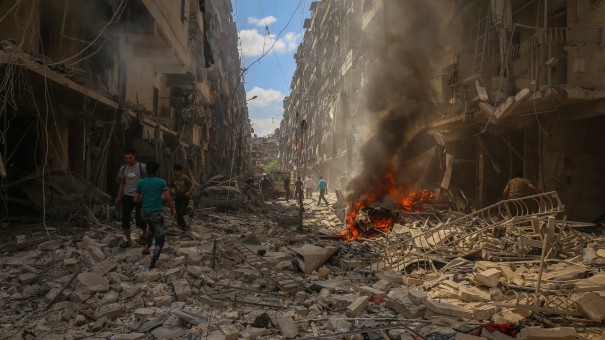
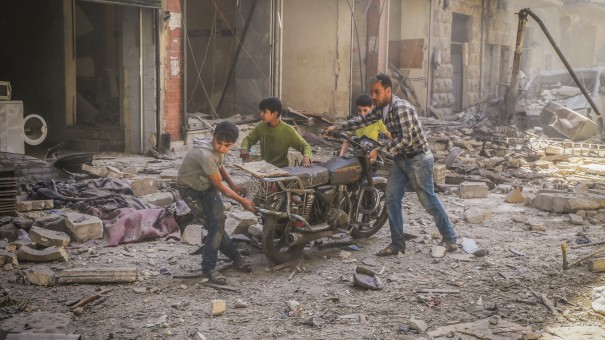
Medical supplies and food support are urgently needed in Aleppo following an increase in attacks over the last two weeks.

The city’s infrastructure has already suffered significant damage including to the main water supply, leaving civilians relying on bottled water.

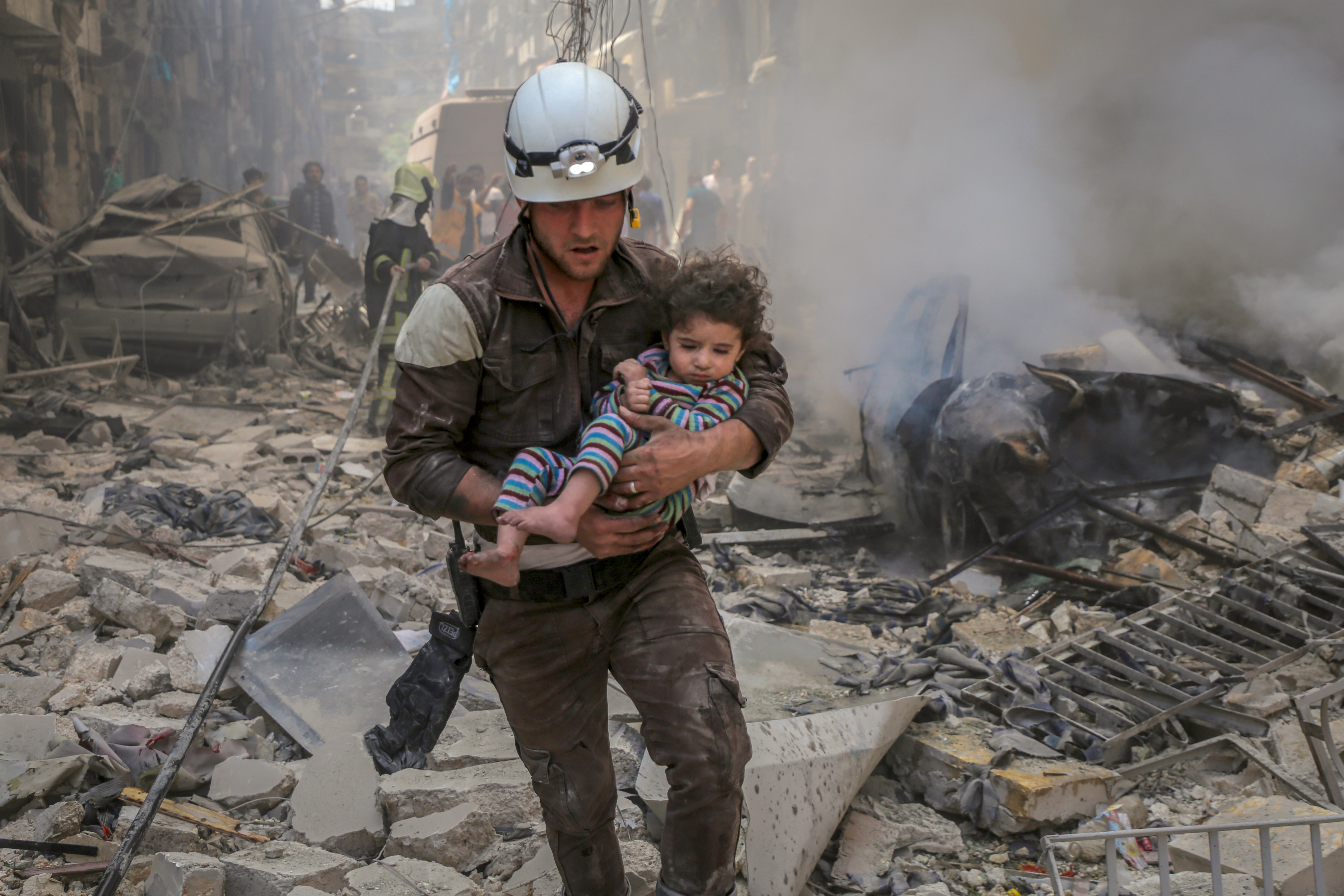
The increase in attacks over the last two weeks has killed at least 100 children, women and men (according to the Department of Health in Aleppo), leaving between 400 and 1,000 more injured.

Homes, schools, hospitals and basic city infrastructure including markets, warehouses for medical supplies and water purification centres have been destroyed.

There is also a shortage of fuel to power hospital generators and community bakeries.

More than half of Syria’s 22m population have left their homes and in Aleppo’s Azaz sub-district newly displaced people are suffering a gap of 1,143 toilets and 2,680 showers.

Concerns are growing that the lack of facilities will leave people at risk of exposure to diseases.

Electricity in eastern Aleppo is typically available for four hours per day and people depend on generators for their electricity supply.

Fuel is also needed for generators to operate water pumps.

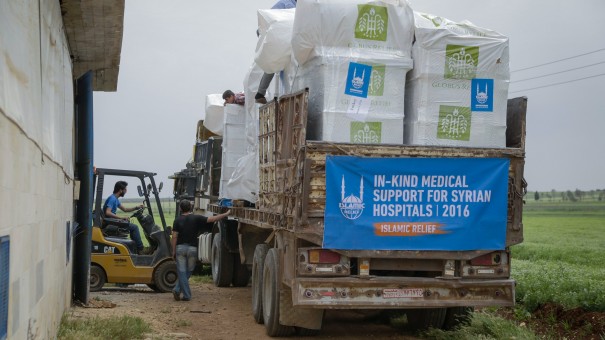
Islamic Relief staff have managed to deliver another truckload of medical items to Aleppo, despite the route into the city being under attack.

The team has also managed to deliver another shipment of 2,400 food parcels and 1,000 hygiene kits.

Next week they plan to distribute bottled water along with more food parcels and emergency medicines.

Islamic Relief has been providing essential humanitarian assistance in Aleppo since 2012.
Muslim charity to put ‘Allah is great’ posters on buses to portray Islam in a positive light

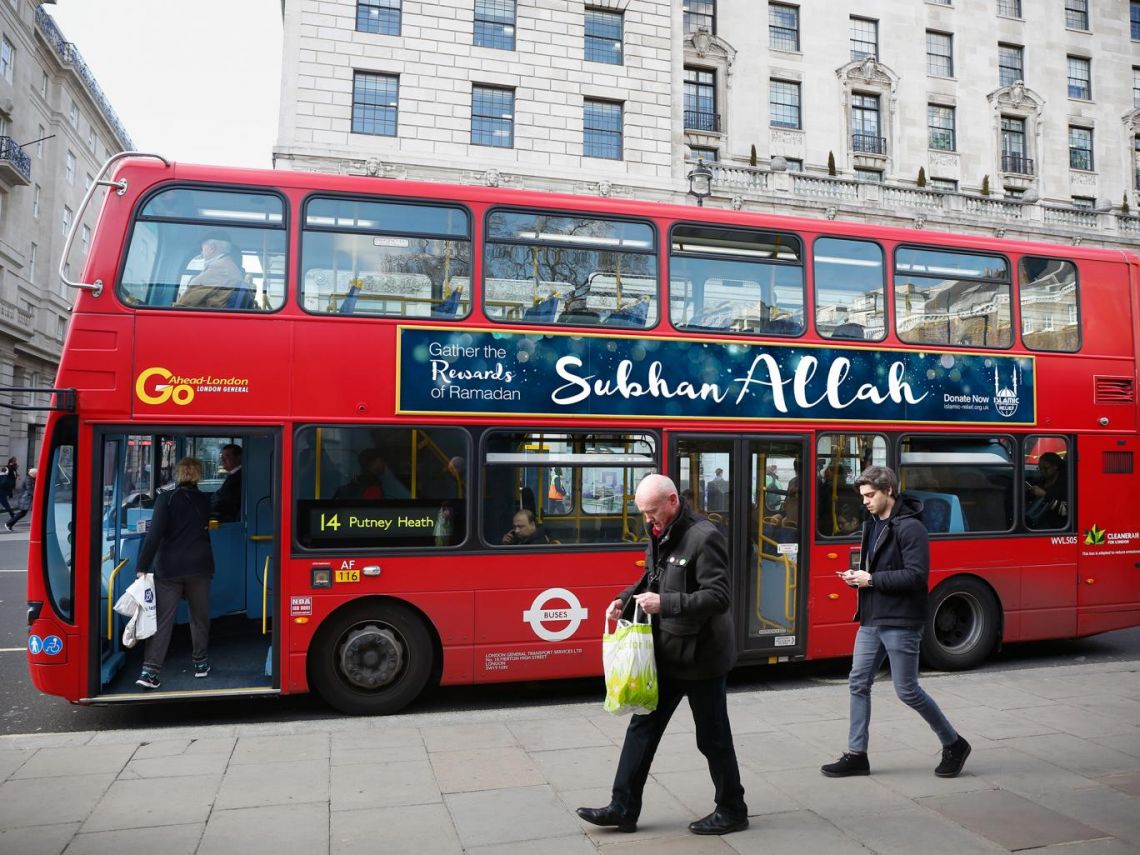
The bus campaign will launch on 23 May in five cities across the UK Islamic Relief


Hundreds of British buses will carry adverts praising Allah as part of a campaign launched by the country’s biggest Muslim charity to help victims of Syria’s civil war.

Islamic Relief hopes the posters, which bear the words “Subhan Allah”, meaning “Glory be to God” in Arabic, will portray Islam and international aid in a positive light.

Buses will carry the advertisements in London, Birmingham, Manchester, Leicester and Bradford.

These cities have large Muslim populations and the charity hopes it will encourage people to donate generously ahead of the start of Ramadan on 7 June.

According to Islamic law, Muslims are supposed to donate 2.5 per cent of their income to the poor and needy.

Known as Zakat, the pratice is regarded as one of the “five pillars of Islam”.

Many people choose Ramadan to donate their Zakat, as the month of fasting is regarded as a month of blessings.

Muslims believe the rewards for all good deeds are greater during Ramadan than during the rest of the year, according to Muslim Aid.

The charity hopes the campaign will help young Muslims channel anger about the war in Syria and discrimination at home into humanitarian work, thereby preventing them from becoming involved with extremist groups.

Imran Madden, the UK director of Islamic Relief, said: “In a sense this could be called a climate change campaign because we want to change the negative climate around international aid and around the Muslim community in this country.

“International aid has helped halve the number of people living in extreme poverty in the past 15 years, and British Muslims are an incredibly generous community who give over £100 million to international aid charities in Ramadan.”

The new campaign will appear on buses from 23 May on 640 buses around the country.

The adverts will have a special resonance in London as the city elected its first Muslim mayor, Sadiq Khan, on Thursday – despite a Conservative campaign which repeatedly accused him of having connections to extremists.

An estimated three million Muslims are believed to live in London – around 50 per cent of British Muslim population.

Source : independent.co.uk

Hospitals hit hardest in Aleppo

Following a month of relative calm, Aleppo has, again, fallen victim to violence.

Barrel bombs, artillery shells and SSMs (surface-to-surface missiles) are battering the already beleaguered city of Aleppo.

The bombardment, which continues to this day, has heavily hit markets, hospitals and mosques, resulting in over 260 lives lost and even more severely wounded. Five volunteer rescue workers have been killed and strikes on hospitals have resulted in the death of both medical staff and patients. One of the most fatal attacks occurred on Al Quds hospital, the only remaining paediatric centre in Aleppo, causing 65 deaths – two doctors and five nurses were killed in this attack alone, including the city’s last remaining paediatrician.


RS49095_IMG_8600


Life has come to a complete halt for the quarter of a million people still in areas of Aleppo not under blockade. With all schools and educational institutions suspended for fear of being the next target, hospitals and medical centres heavily hit, and the destruction of the city’s main water purification facility, Aleppo is in dire need of aid.

Islamic Relief is one of the very few NGOs with an operational office inside the city, and the field team in Aleppo is continuously monitoring the situation and reporting back the city’s requirements.

Right now, Aleppo is lacking food, clean water and medicine.

With the most recent round of bombings having crippled the healthcare system, Islamic Relief’s field team has been mobilising the delivery of medical supplies in the city. Providing basic materials like rice, flour and water to bakeries will allow them to continue feeding the local community. With just one route into Aleppo, a very dangerous road prone to attack by snipers and bombs, getting these bare necessities inside the city is risky but fundamental.

Islamic Relief has been providing essential humanitarian assistance in Aleppo since 2012.
Let’s donate through our campaign SAHAM AKHIRAT

Aleppo: how Islamic Relief is helping

The continued bombardment of Aleppo has caused widespread destruction to markets, hospitals and mosques.

Following a month of relative calm, the recent wave of violence has resulted in the death of civilians, doctors, nurses and even rescue workers. The constant strike on civilian infrastructure has crippled the already fragile city, with life coming to a complete halt for the remaining residents.

The Aleppo emergency at a glance:

  • 263 have been killed and a further 550 injured
  • 281 airstrikes have taken place over the past week
  • 15,000 have become internally displaced
  • 250,000 are living under the threat of airstrikes, barrel bombs and snipers

Islamic Relief has been in Aleppo since 2012, working day and night to provide communities with food, medicine and shelter. Since the most recent escalation, however, the humanitarian crisis has reached catastrophic proportions. To meet the increased demand, Islamic Relief’s front-line team has been:


Mobilising medical equipment and medicine

  • Three large containers of medical supplies have already been delivered to 51 medical points in the past two weeks
  • Patients with severe injuries are being sent to Turkey for medical attention


Distributing food

  • 12,000 individuals in Aleppo have already received food parcels
  • Bakeries are being given flour and vegetables so they can continue to feed local communities


Meeting the fuel shortage

  • Diesel and gas allow medical centres, ambulances and bakeries to continue operating


As well as helping vulnerable people still in the country, Islamic Relief has been offering vital support to families that have fled their homes.

Let’s donate through our campaign SAHAM AKHIRAT

An e-learning course in Islamic microfinance

Islamic Relief and Frankfurt School are developing an e-learning course in Islamic microfinance.

Together with Islamic Relief Worldwide (IRW) and Frankfurt School of Finance and Management, the Islamic Relief Academy is developing an online certification course in the growing area of Islamic microfinance.

The Certified Expert in Islamic Microfinance (CEIM) e-learning course will advise participants on the technical aspects of retail banking, as well as the ethics of Islamic finance and relevant compliance and regulation issues. This joint development, which was made possible through IRW’s partnership with the UK Department for International Development, will be available on Frankfurt School’s LinkEd – an e-learning platform that allows students to study full-time subjects in accordance with their own schedules.

Dr Hossam Said, Managing Director of Islamic Relief Academy, underlined the important contribution this course will make:

“Islamic Relief Academy is delighted to partner with Frankfurt School of Finance and Management and Islamic Relief Worldwide in developing this unique online programme. This e-learning course will be an important contribution to building up capacities of the Islamic microfinance sector and to fill the educational gap that exists in this sector. Through the agreement with Frankfurt School, the Islamic Relief family, and the wider NGO and financial sector, will be able to provide better financial inclusion for the poor and thus help them to embark on a better future.”

Aimed at all development professionals working in the area of Islamic microfinance, the six-month course will be launched in September 2016 for €650.

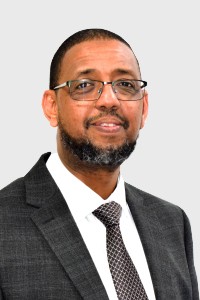
Naser Haghamed appointed CEO at Islamic Relief Worldwide

Naser

Naser Haghamed replaces Dr Mohamed Ashmawey who left the organisation at the end of 2015 as the new CEO of Islamic Relief Worldwide. One of his first duties in the role will be to represent IRW at the official signing of the Paris Agreement on Climate Change in New York this week, as part of a delegation handing in an Islamic Declaration on Climate Change.

Haghamed has a long history with the Islamic Relief family, working in several positions over the past two decades including IT, Support, International Programmes, Islamic Relief Academy and TIC International – a trading subsidiary of Islamic Relief which encompasses clothes recycling and charity shops.

Naser Haghamed

Commenting on his appointment Haghamed said:

“It is humbling to be appointed as CEO of Islamic Relief Worldwide and given the opportunity to continue serving the millions of people this organisation supports around the world. Gender justice, climate change and reducing the risk from disaster are areas where I believe we can make great strides and impact. I especially look forward to continuing our different relationships with the UK department (DFID), UN, EU and others as we continue to work on the important issues of our time, such as supporting the victims of the Syrian crisis and humanitarian reform.”

Monday 18 April 2016

Source : http://www.islamic-relief.org/naser-haghamed-appoi…