Number of Ethiopian refugees fleeing to Sudan has risen

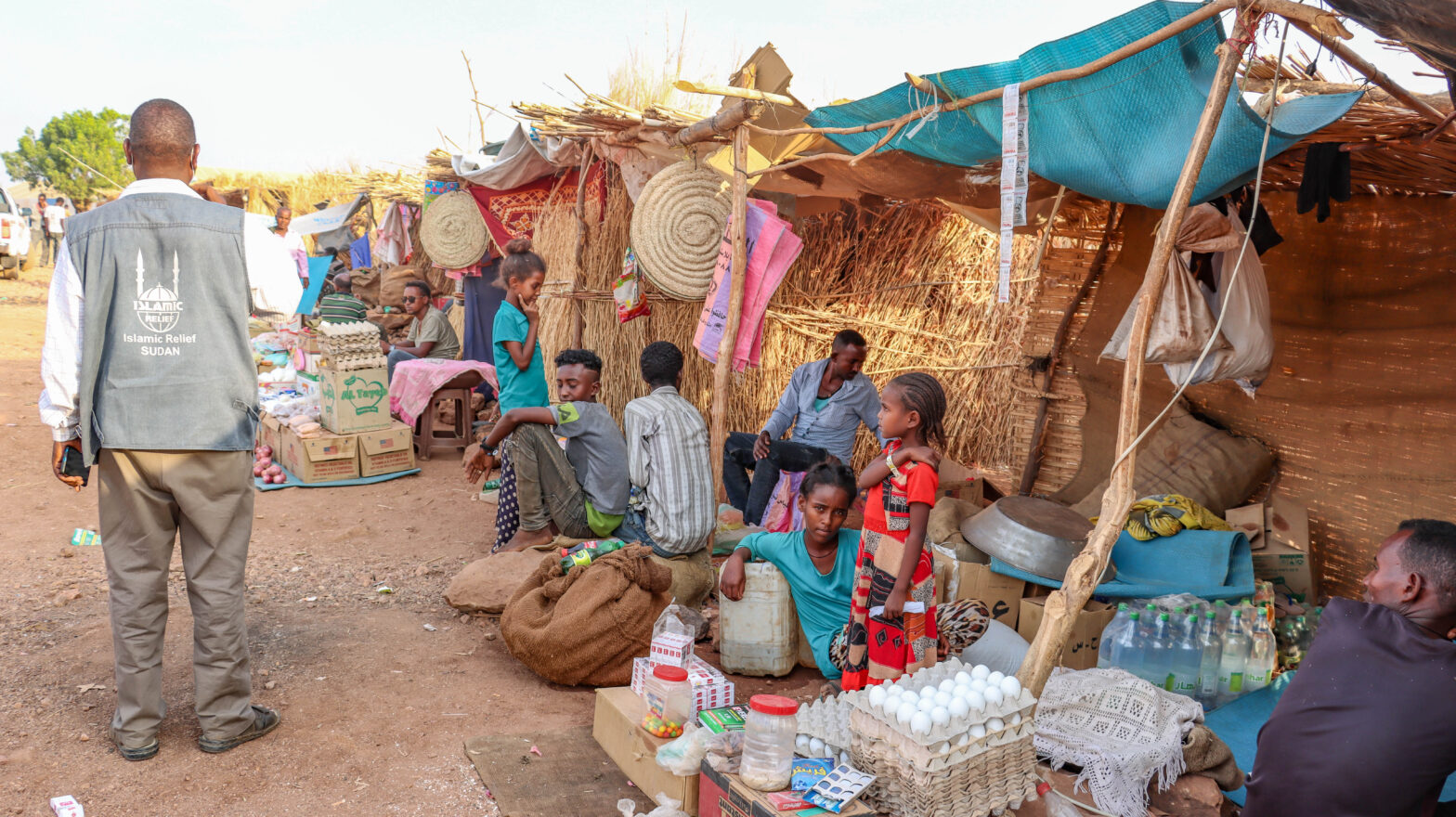
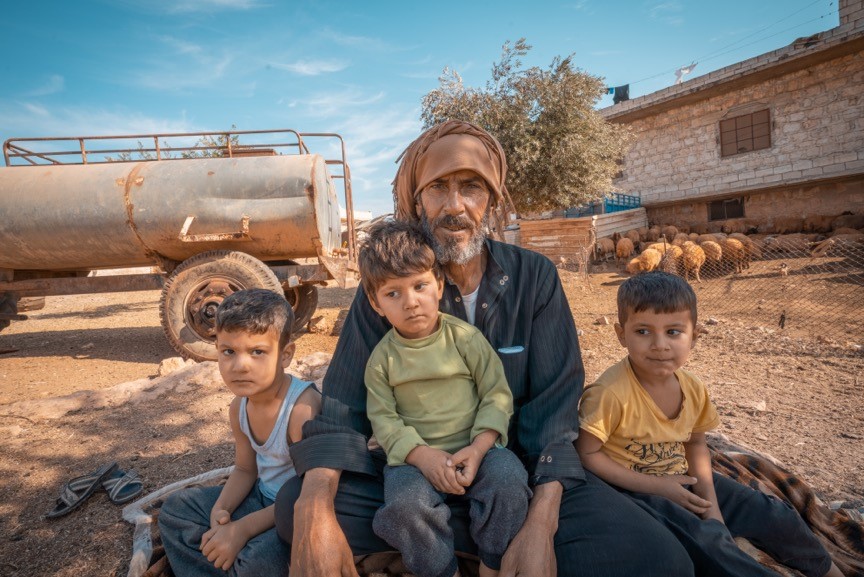
SUDAN, 6 January 2021 – As of December 30, Sudan’s Government Commissioner for Refugees (COR) and the United Nations High Commissioner for Refugees (UNHCR) reported that there are 55,128 Ethiopian refugees have crossed the border into Sudan and registered under the agencies.

Islamic Relief has distributed 1,350 hygiene kits to refugees at Um Raquba camp, Sudan and also identifying several locations in that area for further assistance.

Meanwhile, in the Tunaydbhah camp area, the coordinator for water, sanitation, and hygiene (WASH) sector has come along with their representatives to inspect the area to build latrine facilities.

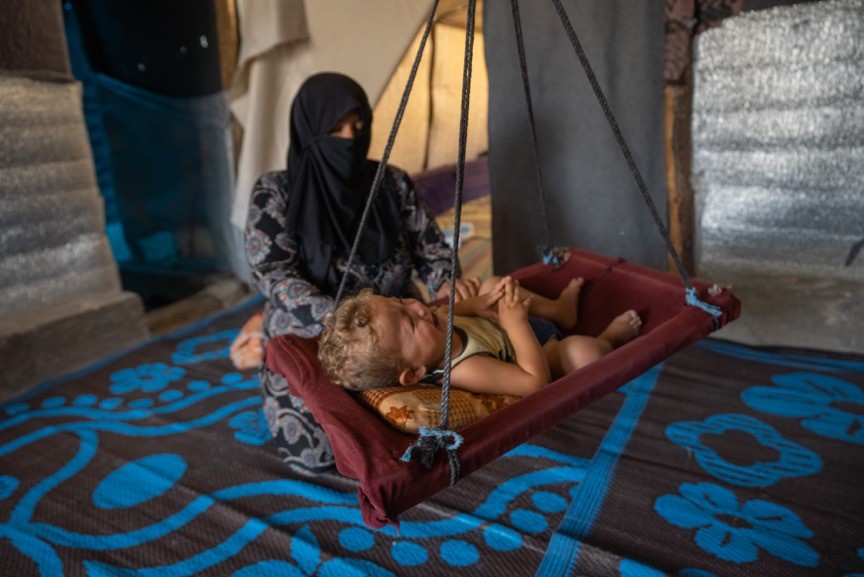
There were 200 refugees have been relocated to Tunaydbhah camp from various areas.

Islamic Relief also submitted the proposal of an educational project to UNHCR and UNICEF to support Ethiopian refugee children which are the second largest group for the whole Ethiopian refugees.

“GOOD NEIGHBOURS” CONSORTIUM RECEIVES MARTIN LUTHER KING AWARD FOR ITS WORK WITH REFUGEES

An inter-faith initiative between Islamic Relief Sweden, the Church of Sweden and the Stockholm mosque has been announced as the recipient of this year’s prestigious Martin Luther King Award in Sweden.

The Goda Grannar consortium – the Swedish term for Good Neighbours – was praised by the award’s jury for bringing faiths together and “inspiring us all to move from words to deeds and promote democratic coexistence.”

The consortium was formed in 2015 after a large influx of refugees arrived in Stockholm from war-affected countries such as Syria. Working with community volunteers, the consortium initially provided nearly 4,000 new arrivals with shelter in churches and the mosque. It has since expanded and now provides a wider range of services for refugees including “language cafés”, guidance on Swedish society and legal advice.

“This award is for all the volunteers who have contributed their time, commitment, big heart and expertise to create a more humane society,” said Fredrika Gårdfelt, priest in the Katarina parish of the Swedish church.

Mohamed Ibrahim, Secretary-General of Islamic Relief Sweden, said: “We are very proud and happy that Goda Grannar is receiving this award. Unfortunately, there are strong polarizing forces in the world and in Sweden today, which makes initiatives that show the importance of cooperation across religions all the more critical. We hope to continue this work for a long time to come.”

On announcing the award, the jury said:

“Martin Luther King once said, ‘The ones who love peace have to learn to organize as efficiently as the ones who love war’.

“Among other reasons, it was war that caused a large number of refugees to seek asylum in Sweden in 2015. One group which organised rigorously to provide them with a good reception was Goda Grannar, which emerged in the middle of Stockholm at the initiative of Katarina parish, Stockholm mosque and Islamic Relief Sweden. In a time characterized by increased polarization and less common ground, Goda Grannar stands as a good example of the strength of working together.

“Cooperation and trust in each other lead the way to common solidarity and drive for action. The consortium proves that it is possible to come from different backgrounds, and yet respect each other’s culture and religion, and be able to work together for a better society. Our award winner is a role model in welcoming and taking advantage of a wide range of competencies. Community members and professionals are invited to contribute with their special knowledge and skills.

“Martin Luther King encouraged us to turn our frustration over injustices into energy to create the world we want to see. The vigorous initiatives of Goda Grannar inspire us all to move from words to actions and promote democratic coexistence. This is an example of using common sense for rigorous planning for peace by actively living the words “together” and “welcome”. The award committee believes that the project shows an intense but low-key constructive force that strengthens humanity and compassion and reduces injustice in the true spirit of Martin Luther King.”


About the Martin Luther King Award:

The Martin Luther King Award is awarded by the Equmenia Church, The Swedish Fellowship of Reconciliation (SweFOR) and the Christian Council of Sweden. It is awarded in the spirit of Martin Luther King to celebrate his legacy of hope and reconciliation.

200 keluarga B40 PPR Desa Rejang Terima Bantuan Pek Makanan

SETAPAK, 20 Disember 2020 – Sebanyak 200 keluarga bumiputera daripada golongan B40 dan ke bawah telah menerima bantuan pek makanan dan kit kebersihan di bawah program ILTIZAM tajaan Ekuiti Nasional berhad (EKUINAS) dengan kerjasama Islamic Relief Malaysia di PPR Desa Rejang, Setapak, Kuala Lumpur.

Objektif program dijalankan bagi membantu meringankan beban penduduk yang terjejas akibat pandemik Covid-19.

“Kebanyakan penerima manfaat terdiri daripada ibu tunggal, warga emas, OKU dan ketua keluarga yang hilang punca pendapatan. Kami memilih PPR Desa Rejang ini kerana kepadatan penduduk di sini semuanya hampir 17 ribu orang yang kebanyakannya tiada pendapatan tetap. Di pihak penaja pula, ini merupakan salah satu program tanggungjawab sosial yang sudah lama dilaksanakan dalam membantu mereka yang memerlukan,” Fa’azurah Kadir, Pegawai Kanan, Bahagian Program Islamic Relief Malaysia.

Setiap pek makanan dilengkapi dengan beras 10 kilogram, kicap, sos cili, tepung, bihun, minyak masak, sardin, biskut, gula garam, pelitup muka, pencuci tangan serta pelbagai lagi.

“Penghuni rumah kami semuanya 11 orang. Dahulu, saya bekerja mengasuh anak-anak jiran bagi membantu suami, namun sejak pandemik melanda, ibu bapa mereka tidak lagi menghantar anak-anak mereka untuk saya jaga kerana pendapatan mereka turut terjejas. Sekarang, hanya suami saya sahaja yang bekerja untuk menyara keluarga besar kami.

“Pandemik ini memang memberi impak yang sangat mencabar pada kami sekeluarga. Bil api dan air kadang-kala tertunggak. Dalam keadaan gaji suami yang telah dipotong dan pemberian elaun juga sudah dihentikan, keadaan kewangan keluarga kami memang sangat terjejas. Dari segi makanan, kami memang cuba sedaya upaya untuk berjimat cermat. Alhamdulillah, anak-anak faham keadaan ibu ayah mereka sedang susah sekarang dan mereka tidak merungut walaupun terpaksa makan nasi berlaukkan telur selalu,” kata Sharifah Nor Hayati, penduduk PPR Desa Rejang.

Rata-rata penerima manfaat yang ditemui menzahirkan rasa syukur yang tidak terhingga atas bantuan yang diberikan. Ucapan terima kasih tidak putus-putus diucapkan daripada mulut mereka.

Islamic Relief Malaysia selaku organisasi pelaksana mengharapkan agar lebih banyak lagi pihak tampil untuk menjalinkan kolaborasi bersama agar keperitan yang ditanggung golongan rentan dapat dikurangkan selain menyemarakkan semangat cakna dan prihatin akan nasib mereka yang memerlukan di sekeliling kita.

Ethiopian Refugees Receive Humanitarian Aid from Various Stakeholder

SUDAN, 10 December 2020 – 49,370 new arrivals of Ethiopian refugees have registered under the Sudan’s Government Commissioner for Refugees (COR) and the United Nations High Commissioner for Refugees (UNHCR) after crossing the border into Sudan.

UNHCR and COR continued on relocating the Ethiopian refugees to the new settlement in Um Raquba, Gadaref by buses.

They are equipped with food, biscuits, drinking water, face masks, soap, dignity kits and non-food items (NFI) from various organizations.

Islamic Relief is currently working on distributing food, NFI and doing preparation to build latrines and water facilities.

Our staffs are also joining a training on Core Humanitarian Principles to help the refugees.

All refugees in Hamdayet and eight other transit centers were getting face masks, soap, access to clean water, medical treatment, and education for 1,100 students from one year to 13 years old.

They are also provided mobile child friendly space to play and doing some activities such as acting, singing, drawing and sports.

26 social workers are joining training and courses on child protection in emergencies, case management, evaluation and other related issues on children.

Lawyer urges fellow survivors of gender-based violence in Iraq to speak out

Sara is a lawyer representing abuse and sexual violence survivors. She had been in a violent relationship for over a decade, but had never lodged a complaint against her husband, a respected professor and head of the teaching staff.

By telling her story, she wants to show others in similar situations that there is hope. “If I am able to leave a 13 year-long abusive relationship and start over again, anyone can do it”, says Sara.

In the first 5 years of her marriage there was no physical abuse from her husband. The violence started after she started to earn more money than him. He began with verbal abuse and took full control over her finances.

She was required to buy him expensive clothing, and a weekend home in the countryside. She was not allowed to spend on herself or her daughter. He took her money as his own and tried to control every aspect of her life. Then it escalated to violence, where he would frequently beat her.

Sara found that the higher her husband climbed on the career ladder, the more obedience and perfection he demanded of his wife and daughter.

“I didn’t feel free and safe enough to talk about the abuse,” Sara explains. “I felt threatened, I had no sense of security. There are many women that are abused in Iraq. Little to no attention is paid to what women are going through. Nothing happens to the abusers. Many women die of domestic violence every year, but no one cares”.

That is why Sara started to share her story, hoping to raise awareness of domestic violence.

“Every time he hit me I told myself that this would be the last time, but fear always held me back. Fear of society’s judgement, fear of retaliation, fear of death and most importantly I had a daughter that I had to think off, it gave me reasons to stay, until I had no choice but to run.”

Sara never talked to friends or family about the abuse she went through, so when she left her husband she found it difficult to answer their questions.

“How do I tell my family and friends that he used to hit us in places that no one could see? That he would be meticulous in covering any signs of abuse. That if you lifted up my jumpers or dresses, my stomach and legs would be covered with black and blue bruises. He would pull my hair and kick me in the stomach.

“When I went behind his back and opened up a separate bank account, his violence escalated to hitting me in the face. This meant that I was unable to work and contribute financially. There were times that he taunted me and would say that no one would believe me over him. That he was a respected professor and that there was nothing I could say or do. That destroyed me more than anything else.

“I knew I couldn’t prove anything. He knew that too. I never told anyone what it was like at home. I knew it would only get worse. There were two options in my mind: everything would get better and I would stay, or I would have to leave. In the latter case, I had to be prepared save up some money, and to get proof. I knew I wouldn’t be believed.

“I decided to reach out to Islamic Relief as I knew that they helped people in need, and started to resist more at home. As a result, the violence increased, towards me and also towards my daughter. The [incident that finally made me] leave was something small. But it made me determined to get my daughter out alive.

“I felt so isolated from everyone and was physically and mentally at a low point in my life. Then I received support from Islamic Relief, who welcomed me into their women’s safe space, where women who have experienced gender-based violence are given counselling. It was nice to confide in someone, to tell the truth. I started taking recreational courses and building my confidence to tell my family that my husband had been abusing his daughter and me.

“I sat my family down and explained what has been happening for more than a decade, and that leaving my marriage meant that I was saving my daughter from being motherless. They didn’t know it was that bad. They were angry that I kept it to myself for so long. But I didn’t know how to share my story with them. I was ashamed for so long. I kept asking myself how I got here, I was an educated woman with a university degree and a career. How did this happen to me?

“I have learned that most women tend to blame themselves and hold themselves more accountable then they do others. Through the counselling I learned that I am stronger than I think and I am not to blame for his behaviour.

“I was able to go back to work. I pay my own bills. I now live in my own house with my daughter. We walk in the woods. I am slowly rebuilding my circle of friends and family. I feel guilty all the time, especially about my children and family. That will never pass. I’ll feel I have to make it up to them for the rest of my life.

“I used to be constantly scared. Afraid he would find me. Afraid I might lose my job. Afraid he would hurt me or my child. He threatened that one day the police would be at my door. He did everything he could to make sure I lost my job. The fear is not gone, but it is less present now.”

Sara says that trauma therapy and sharing her story with other women helps her come to terms with her experiences.

“Sharing each other’s stories helps, because you learn from each other and can deal with your own problems a bit better. We all go through things and it is better to talk about it than bottle everything up.

“In Iraq women don’t talk about their abuse, which results in more violence. But it has to stop, and more women need to come forward with their stories to show that we are facing a silent killer in domestic violence. I have made it my goal to show that it can happen to anyone and to help those that are suffering through domestic abuse. I use my position as a lawyer to help survivors, as I am a survivor myself. I want to make other women feel worthy to fight for themselves.

“I have a long way to go to rebuild myself back to the person I was before the abuse, but teaching women that there is a way out is my mission at the moment. Knowing that I am making a difference makes me proud of what I have overcome.”

Islamic Relief works to improve gender justice through our programmes, policy and advocacy work. As well as empowering vulnerable women and girls through raising awareness around gender-based violence, Islamic Relief also offers life-changing counselling. We run workshops offering faith-based perspectives on child protection and gender-based violence, equipping women to bring about lasting positive change in their own lives and communities.

Support our work and help vulnerable people turn their lives around.

Islamic Relief counselling in Gaza helps girls like Noha who face violence at home

Fourteen-year old Noha* lived in such fear that even the sound of her own name terrified her.

Noha lives in Gaza, where economic hardship and the anxiety of further conflict is ever present. Home did not feel safe since her brother regularly subjected her to physical and emotional abuse.

“Every day, I was terrified whenever my older brother called my name, because it was usually followed by beatings,” says the teenaged girl.

The abuse affected Noha in many ways, including at school as her educational achievement declined.

“For so many years I hated my brother, my family, and myself.  Home was a hellish place. I used to run away to my aunt’s house and stay away days on end to avoid the beatings,” Noha says.

Noha’s suffering increased when her brother lost his job and money became tighter.

“My brother was about to get married, but he was forced to break up with his fiancée due to lack of money and he couldn’t find a job. That is when everything deteriorated and his violence towards me became more frequent,” she explains.

With her mother’s help, Noha was able to get counselling from Islamic Relief.

“When my mother asked my opinion about participating in the psychological support sessions, I didn’t agree at first as I felt ashamed. Now, I am very happy that I received this service, thanks to Allah.

“The counsellors give me advice and when I feel sad I don’t hesitate to tell them.

“I have changed a lot after participating in the psychosocial sessions with Islamic Relief. Now, I’m stronger and able to stand up for myself, and talk to my brother. I’m not avoiding him anymore.”

The psychosocial support Noha received focused on stopping the violence perpetuated against her, and increasing family bonding.

“The counsellors visited us at home and provided psychological support sessions to my brother and all my family members. This helped us get to a closer and more loving place in our relationships.

“I love mathematics and Islamic studies and when I grow up, I would like to be a teacher. School wasn’t on my mind when I was going through abuse, and I could see it affecting my schoolwork and overall happiness. Now I am in a better place in my life and have the desire to succeed. Thanks to the counsellors who worked with me”.

Even though Noha has overcome some of her challenges, like so many others in Gaza she now faces the impact of Covid-19.

“Due to the coronavirus, schools are closed. Teachers have been giving online lessons, but unfortunately I do not have a computer or a smartphone to access these lessons.

“At home we have only one phone, which belongs to my eldest sister. Each of my siblings uses the phone for an hour a day. This does not give enough time to follow all my lessons. What’s more, when the electricity is off at the house, there is no lighting so I am unable to study or read.”

However, Noha is thinking positively and studying as much as she can.

“Even though we live in challenging times, and social movements are getting stricter in Gaza and around the world, education is giving me a connection to the outside. Focusing on learning is keeping me going during the hard times. I hope that all the seeds I plant will grow into something of significance to the world.”

During this year’s 16 Days Of Activism campaign we are joining thousands of organisations working to highlight stories like Noha’s. She has gone through many changes and experiences, and through Islamic Relief support has the confidence to finally stand up for herself and speak up.

Islamic Relief works to strengthen community-based mechanisms to enhance local capacity to prevent and respond to protection risks, including gender-based violence (GBV).

Some of the training is aimed at enhancing women’s and children’s capacity to be able to support themselves and protect themselves from GBV.

We ask others to join us in placing survivors at the centre of our programmes by empowering local communities to take ownership of developing more cohesive and sustainable programmes.

Islamic Relief is pushing for an end to all forms of gender-based violence. Discover more about how we’re making a difference through our ‘survivor centred’ approach to humanitarian and development programming.