Susica Camp was a notorious concentration camp, operated by Republika Srpska during the Bosnian War. Bosnian Serb forces imprisoned Bosniaks and Croats in such camps as part of their campaign of ethnic cleansing against these populations in Bosnia and Herzegovina.
According to the United Nations, as many as 8,000 Bosniak and other non-Serbs in the region were detained at Susica, where they were subjected to horrific acts of cruelty.
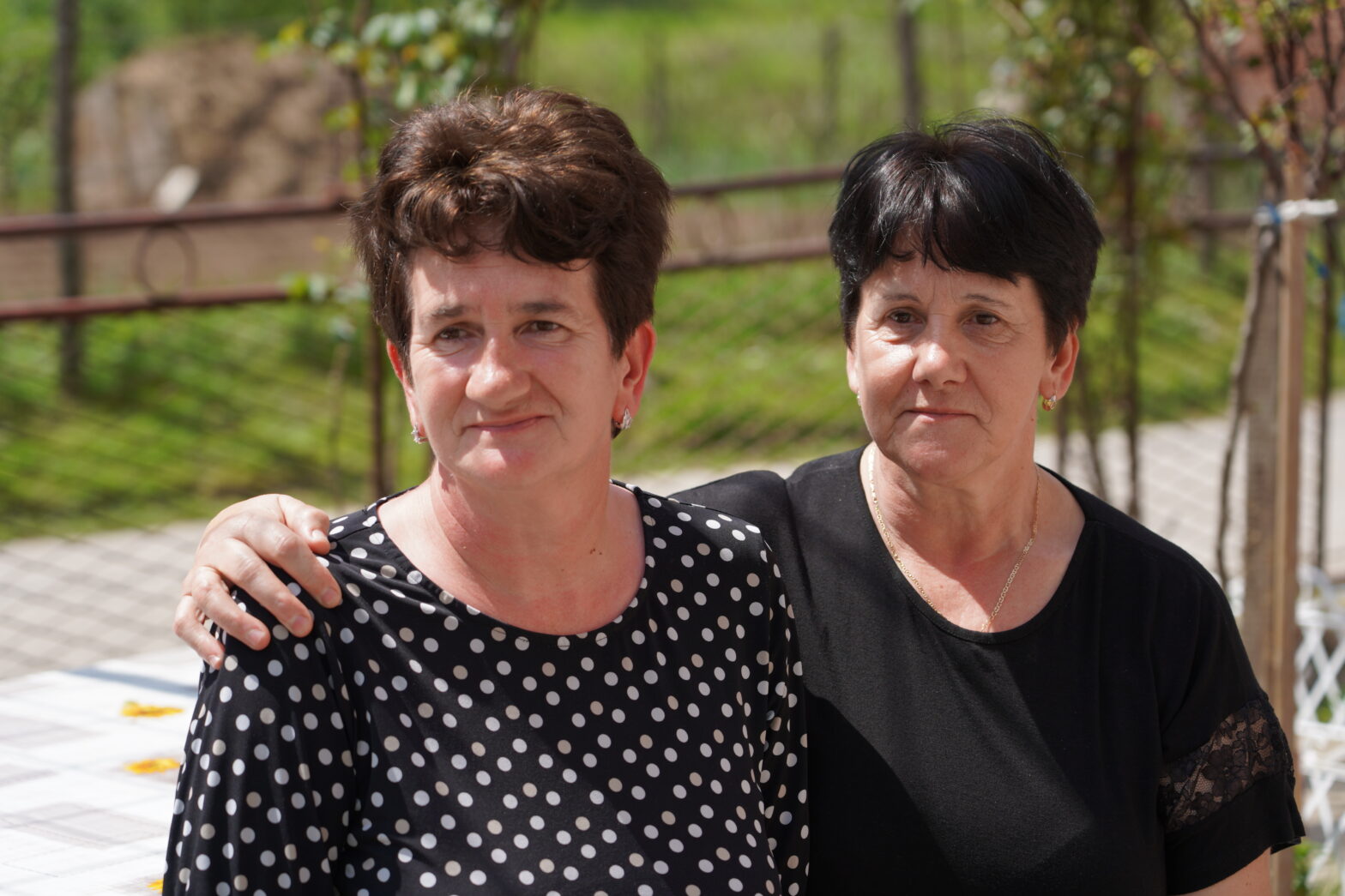
Tenzila, 55, and Mensura, 65, are sisters, born and raised in the town of Vlasenica in eastern Bosnia. They are both survivors of Susica Camp.
*This article contains descriptions of violence and torture that some may find disturbing. We have included them to give a true indication of the harrowing nature of events that happened during the Bosnian War.
Mensura: “We lived in the family home with our father and mother. We were 6 sisters and 2 brothers.
“My childhood was wonderful, our father worked and our mother was a housewife.”
Tenzila: “We didn’t want for anything. We had our own house and a field. I went to school here. And I got married early, at 16 and a half.”
Mensura: “I was married here in Vlasenica.
“We had a beautiful house. Life was excellent until the war. We worked, both of us, we built a house, we had 2 children. Life was good up until the war.”
After the war started, it didn’t take long for the violence to Vlasenica, ripping the small community apart.
Mensura: “I worked until the very last day (before Serb forces reached Vlasenica). My husband was already home with my 2 sons when I came home from work that day.
“I went down to my garden to weed the onions.
“My husband called to me from the balcony to come in from the garden. At the intersection near my house, there were many people, and the Serb army was there, armed with rifles.
“I went into the house in my dirty sweatpants to get at least something (else) to put on.
“A soldier stopped me and said, ‘You can’t go upstairs anymore’. He said, ‘This is not yours’. I said, ‘It is mine, I have to go change.’
“I went inside, changed, and from there they took us all on foot through the streets to the camp.”
The camp was deliberately overcrowded, and prisoners were deprived of adequate food, water, medical care as well as sleeping and toilet facilities. Men were tortured and beaten daily by dozens of guards, many of whom they had grown up with as neighbours. Some, they would have called friends.
Both sisters remember one particularly harrowing incident.
Tenzila: “While I was in the camp, I saw how they beat people, how they took them out, including Sevko, a man from my sister-in-law’s family.”
Mensura: “The doors opened at night and they called him.”
Tenzila: “He was with the guards and he kept crying out. They took him outside, and he just screamed ‘Oh mother, my eyes.’
“I think they took out his eyes with some dull object and killed him there.”
Mensura: “They didn’t kill them with firearms but with blunt objects. You could hear the thuds and the screams.”
Tenzila’s husband is one of the hundreds of Bosniak and Croat men who were murdered at Susica Camp.
Tenzila: “They took my husband on 24 May 1992.
“He was near the mosque in Vlasenica helping the imam when they took him. They held him for 8 days. Then, on 1 June 1992, they took him with 36 other people – our neighbours – up to Mrasnica, behind Susica, behind the camp, and killed him.”
Women in the camp were subjected to horrific treatment, including sexual assault.
Mensura: “All kinds of things happened. Younger women, girls, were taken away. They returned to the barracks crying, messed up.”
Tenzila: “They called people away often, then brought back the women, all messed up.”
Mensura: “In the end, they took someone we knew and her sister to Mrasnica, where Tenzila’s husband was killed. Her body was found on the surface of the mass grave.
“We saw all that with our own eyes. Those 3 days and 3 nights [we spent in the camp], it was horror.”
Tenzila: “But as for me and my sisters, no one touched us. No one.”
Men were not allowed to leave the camp, but women were often held before being forced to sign documents stating that they were voluntarily leaving the camp. They were then transported by bus to Bosniak territories to the west. When this happened to the sisters, they decided to separate. Tenzila and their mother spent time in Croatia and Switzerland, while Mensura stayed near Sarajevo in a town called Kladanj.
Tenzila: “I don’t know the date that we left the camp… We spent only 1 night in Kladanj, then we went to Tuzla. I stayed there for 15 days, mostly in basements, where we could hear grenades and shooting.
“There was nothing to eat. I sold the jewellery I had on me so we could buy bread, margarine, and powdered sugar.”
Mensura: “I spent 15 months in Kladanj, working in a sawmill for the scraps they gave us, which was a little flour and oil. I stacked planks in the yard just to earn something so I could feed my children.”
Tenzila: “A bus came from Croatia. I signed and went to Croatia with our mother, youngest sister and my children. We were there for a month.
“I worked in Croatia, picking tobacco. We had meals and clothes there.”
Mensura’s husband was also held in Susica Camp. To her great joy, he survived the ordeal. After being apart for a number of years, Mensura and her husband were reunited.
Mensura: “My husband and my 2 brothers-in-law were taken to Batkovici (another concentration camp). They were there for 15 months.
“He survived the beatings, but his health suffered. After 15 months, he was exchanged (via a prisoner exchange with the Serb forces).
“7 months after that, I found out he was alive when the Red Cross read messages from prisoners on TV. I just jumped with joy – I didn’t know what to do. I went, despite grenades falling, to the Red Cross.
“When I saw that message, it was my husband’s handwriting. He was just letting me know that he was alive, and that he was in Bijeljina (northeastern Bosnia), registered with the Red Cross. Months passed, we exchanged some messages, and then one evening we saw the [prisoner] exchange happening on TV.
“I can’t describe that moment, meeting him again. It was hard. The men were so thin, I couldn’t recognise my husband. He was skinny and clean shaven. Skin and bones and nothing else. We met there in Kladanj but my children walked by him, they couldn’t recognise their father.”
“He was so thin and exhausted. So, we stayed there in Kladanj. He started working a little in the sawmill.”
Eventually, Tenzila and her mother returned to Vlasenica, where they found it tough to settle back into life in the town after everything that had happened. Both sisters still struggle to process everything they experienced at Susica Camp. The camp still stands, disused but not forgotten, just minutes from Tenzila’s home
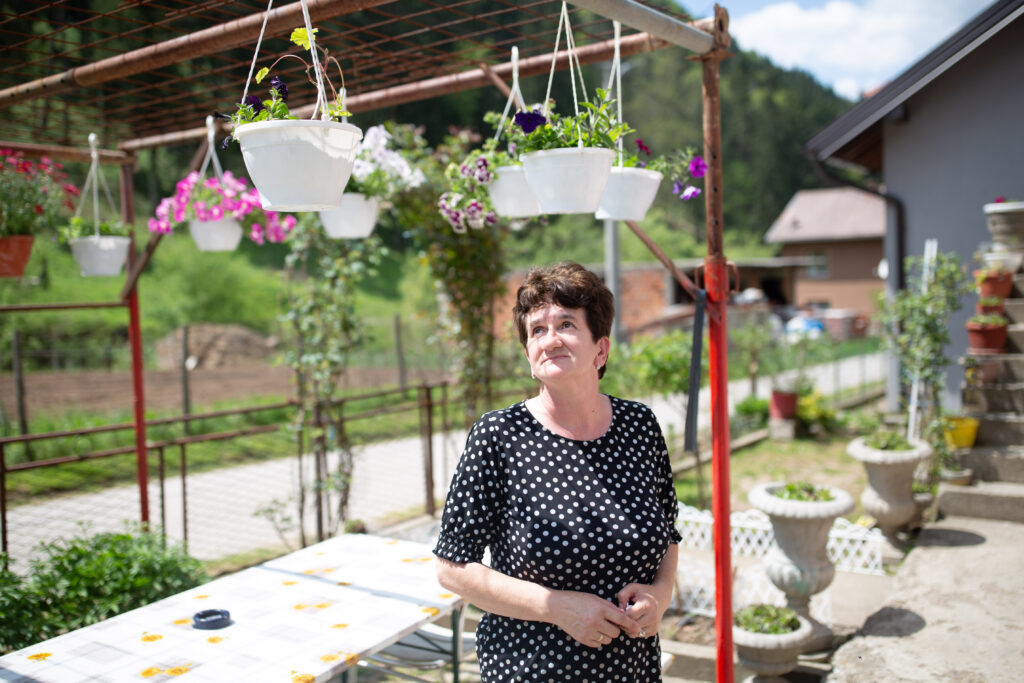 Tenzila: “My mother thought she would find my brothers, that they would show up from somewhere. Somehow one keeps expecting they will come back, even though my brothers were [later] found and buried down there.
“I still believed [for some time] that what I’d heard in the camp about men being killed wasn’t true. You can’t believe that someone you used to walk and drink coffee with took everything from you.”
Mensura: “No one ever acknowledged the camp, no compensation, nothing. My husband only has a small pension. That’s it. But we fight and live on somehow.
“The war ended, but for us, it has never really ended. The trauma is always there, in the mind, in the head.
Tenzila: “It’s hard but where else do I have to go? Where else? I have a field up there, behind the camp. I pass by the camp almost every day.
“I turn at the bridge, where I saw my brothers and father for the last time. I recite Fatiha (a prayer) and… keep going. It would have been easier if I had tears. To cry it out. But now even the tears have gone.
“It’s heavy on the soul, I can’t fall asleep unless I take a pill to calm down.
“It is hard. The trauma lasts a lifetime for everyone. Hunger passes, poverty passes, everything passes, but the trauma and consequences stay. It’s huge and stays with you for your whole life.”
Now, Mensura still lives in Kladanj with her husband and children, while Tenzila, relies on her husband’s pension and support from Islamic Relief’s Safe Futures for Returnees and for the Survivors of the Srebrenica Genocide programme to make ends meet. Tenzila receives monthly food packages from Islamic Relief, while 2 of her granddaughters are receiving financial donations to help them attend school.
Tenzila: “I think I’ve been receiving the food packages since last year. I get one package every month. It helps me a lot, it’s really useful.”
Mensura: “We are thankful to organisations (like Islamic Relief). They really help people. I am grateful they help those who are in awful situations, like my sister for example, and countless others who lost their loved ones, lost their children, lost everything.




 “I witnessed everything that happened in Sarajevo during the war. Sarajevo was under siege for the longest time in history, for more than 3 and half years.