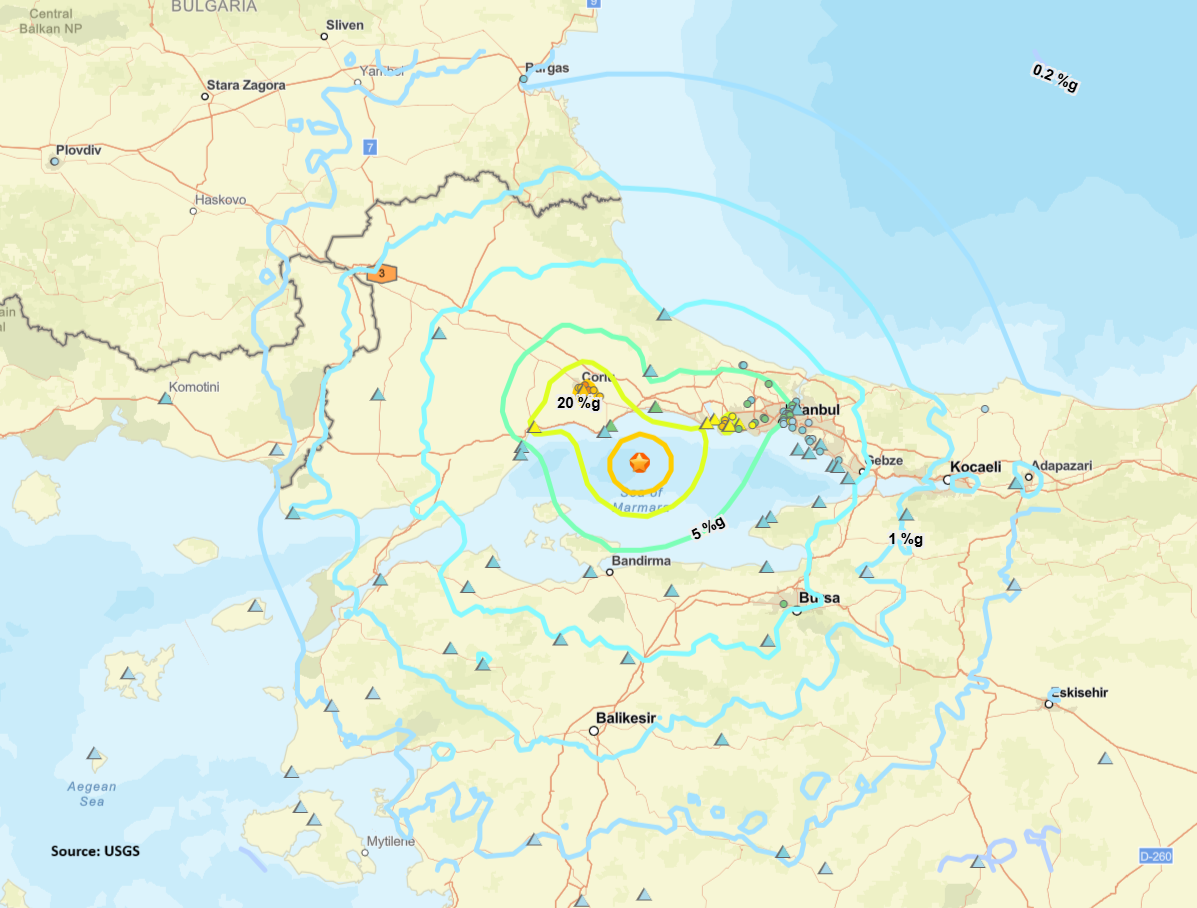
ISTANBUL, Apr 24 — A powerful 6.2-magnitude earthquake struck off the coast of Silivri in the Sea of Marmara approximately 40 kilometres southwest of Istanbul on Tuesday afternoon.
The quake was strongly felt across Istanbul and neighbouring provinces, including Tekirdağ, Yalova, Bursa, Sakarya, and Balıkesir.
The tremor, which lasted around 13 seconds, triggered widespread panic and was followed by 266 aftershocks, including a significant 5.9-magnitude quake and nine others above magnitude 4.
While no fatalities have been reported, 236 individuals were injured mainly due to panic-related incidents such as jumping from high places in an attempt to escape.
There have been no major reports of structural damage, though assessments are still ongoing. Hospitals and emergency services remain fully operational.
As a precaution, schools in Istanbul have been closed until Monday, 28 April 2025. Several educational institutions and government buildings have been opened as temporary shelters, providing WASH (Water, Sanitation, and Hygiene) facilities and basic support to individuals hesitant to return home due to continuing tremors and anxiety.
Islamic Relief has confirmed that all staff members in Istanbul are safe and well, Alhamdulillah. Our team is actively monitoring the situation on the ground and remains ready to mobilize humanitarian support should the need arise.
In the aftermath of the quake, Türkiye’s national emergency response protocol was swiftly activated, with Türkiye’s Disaster and Emergency Management Authority (AFAD) and the Turkish Red Crescent (Türk Kızılayı) leading coordination efforts.
Emergency services were deployed to provide shelter, basic needs, psychosocial support, and WASH assistance to affected communities.
Islamic Relief continues to pray for the safety, strength, and resilience of the people of Türkiye during this challenging time.
Since 2 March, Israeli authorities have reinstated a complete siege on Gaza, blocking all aid and commercial goods from entering for more than six weeks to date. This marks the longest period the Government of Israel has blocked all aid and goods from entering Gaza in history.
Since 18 March, attacks by Israeli forces in Gaza have killed over 1,630 Palestinians, injured more than 4,200, and forcibly displaced over 419,300. The Palestinian death toll now nears 51,000 in Gaza, according to the Ministry of Health, and is approaching 1,000 in the West Bank, including East Jerusalem.
The UN Secretary-General has called Gaza a “killing field” and warned that civilians in Gaza are in an “endless death loop”. The weaponization of aid, including withholding food, water, health care, and shelter, has led to a surge in preventable deaths and threatens the dignity and survival of Palestinians in Gaza.
A new survey of 47 international and Palestinian NGOs, conducted as part of the 11th issue of the NGO Humanitarian Access Snapshot, has found:
95% of agencies reported suspending or reducing services in Gaza since 18 March.
At least 8,881 pallets of aid supplies remain stranded outside Gaza, blocked from entering.
95% of NGOs are facing an increase in movement restrictions across the West Bank too.
The Israeli military has made 70% of Gaza into no-go areas.
At least 61 aid workers killed or injured since 1 January, and at least 412 killed since October 2023.
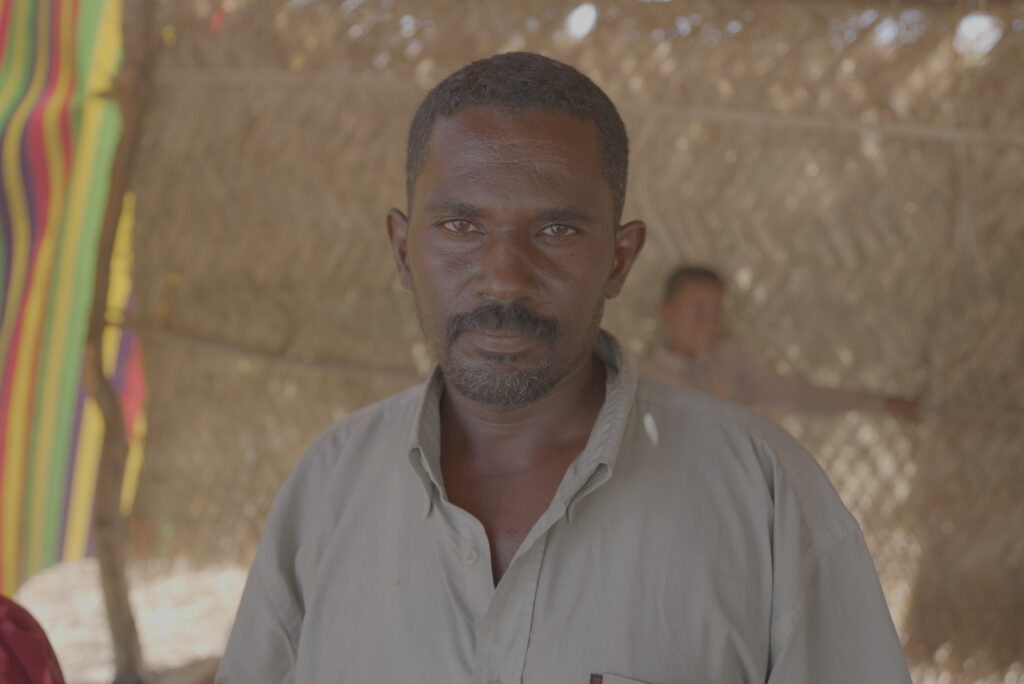
More than 2 years ago, war erupted in Sudan, tearing apart lives, homes, and futures. Since then, millions have been displaced, thousands killed, and countless families left with nothing. Among them is Abu Bakr Bano Mohammed Hamed, a 43-year-old farmer from Sharq Al-Bahar.
His story is one of unimaginable loss, but also of strength, faith, and the urgent need for peace.
They left us with nothing
Abu Bakr, a father of 2, once tended to 15 acres of land, growing chilli, mint, and onions; he was his family’s only source of income. But in an instant, everything was stolen from him.
“They kicked us out of our village, beat us, and told us the land belonged to them now,” he recalls. “They whipped us, stole our cars, took our crops, even the money we had saved. They left us with nothing.”
With no time to gather belongings, Abu Bakr, his wife, and their children joined the exodus of displaced families. The journey to Gedaref [MG1] in eastern Sudan, a region now overwhelmed with displaced families, was a nightmare.
“For 2 days, we had no food, no water, not even tea,” he says. “The elders suffered the most. Some were too weak to move. We had to leave behind the sick because we had no way to carry them.”
The roads were controlled by armed men, forcing them to take dangerous detours. At one point, they passed a village where even the solar-powered water pumps, once a lifeline for thirsty travellers, had been seized by fighters.
“They took everything,” Abu Bakr repeats, as if still trying to make sense of it. “Even the medicine from the hospital. They left nothing.”
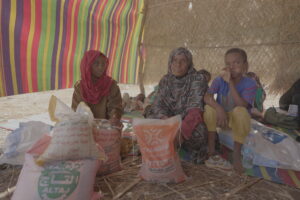
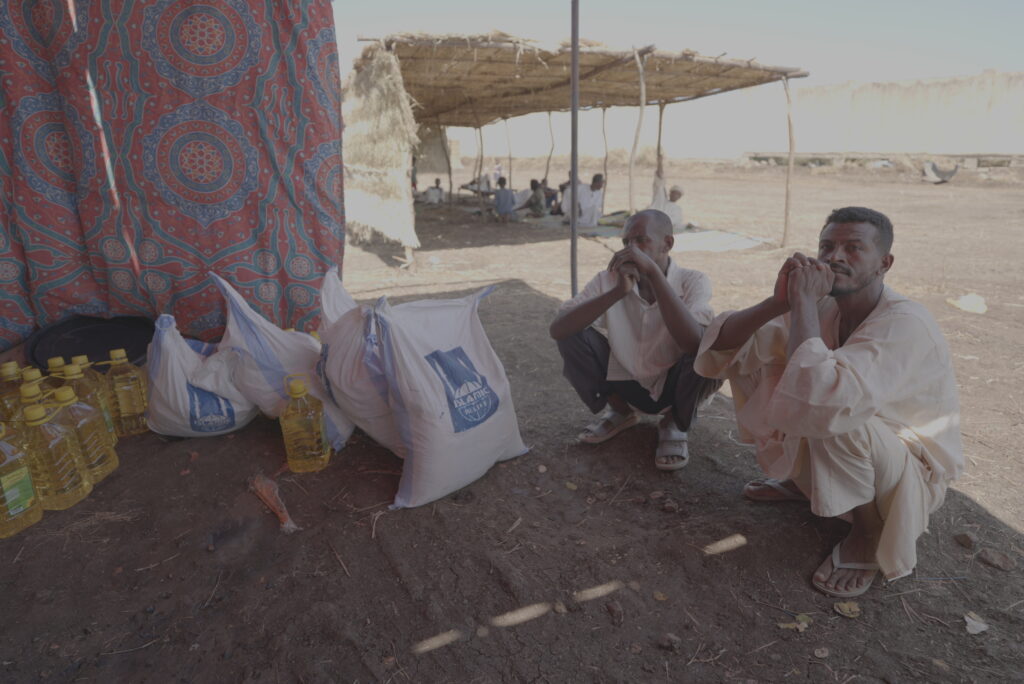
Displaced families gather in a makeshift shelter in Gedaref. With no formal camps available, many rely on community support and humanitarian aid to survive
A nation shattered
When they finally reached Gedaref, there was no shelter waiting for them. No aid. Just thousands of other displaced families, all equally desperate.
“We slept under trees at first,” Abu Bakr says. “Then, with the help of some community members, we set up a makeshift tent.”
Sanitation is dire. There are not enough latrines. Diseases spread quickly. Food is scarce.
Yet even in these conditions, acts of kindness have kept them going. Many local people opened their homes and shared what little they had, providing newly arrived families with shelter and food. Islamic Relief was among the first organisations to deliver food: lentils, rice, sugar, and cooking oil.
“They even brought us bread from the bakery,” Abu Bakr says. “May Allah bless them.”
But these provisions are a temporary reprieve, not a solution.
“What we need most is safety,” he stresses. “And a way to earn a living again. Right now, we have nothing.”
Overcrowded living conditions in a displacement camp. Limited sanitation and scarce resources have led to disease outbreaks among vulnerable families
Wounds of war
The physical deprivation is only part of the suffering. The psychological toll is crushing.
“Honestly, it’s indescribable,” Abu Bakr says when asked about his mental state. “I am so upset, not just for myself, but for all of Sudan. I don’t think we will ever recover from this.”
His children, once carefree, are now withdrawn. His wife struggles with fear and grief. The betrayal cuts deepest, many of the attackers were once neighbours, even friends.
“They ate with us, worked beside us, then turned on us,” he says. “When they came for our village, they were wearing RSF uniforms. They pointed guns at us and said, ‘This land is ours now.’”
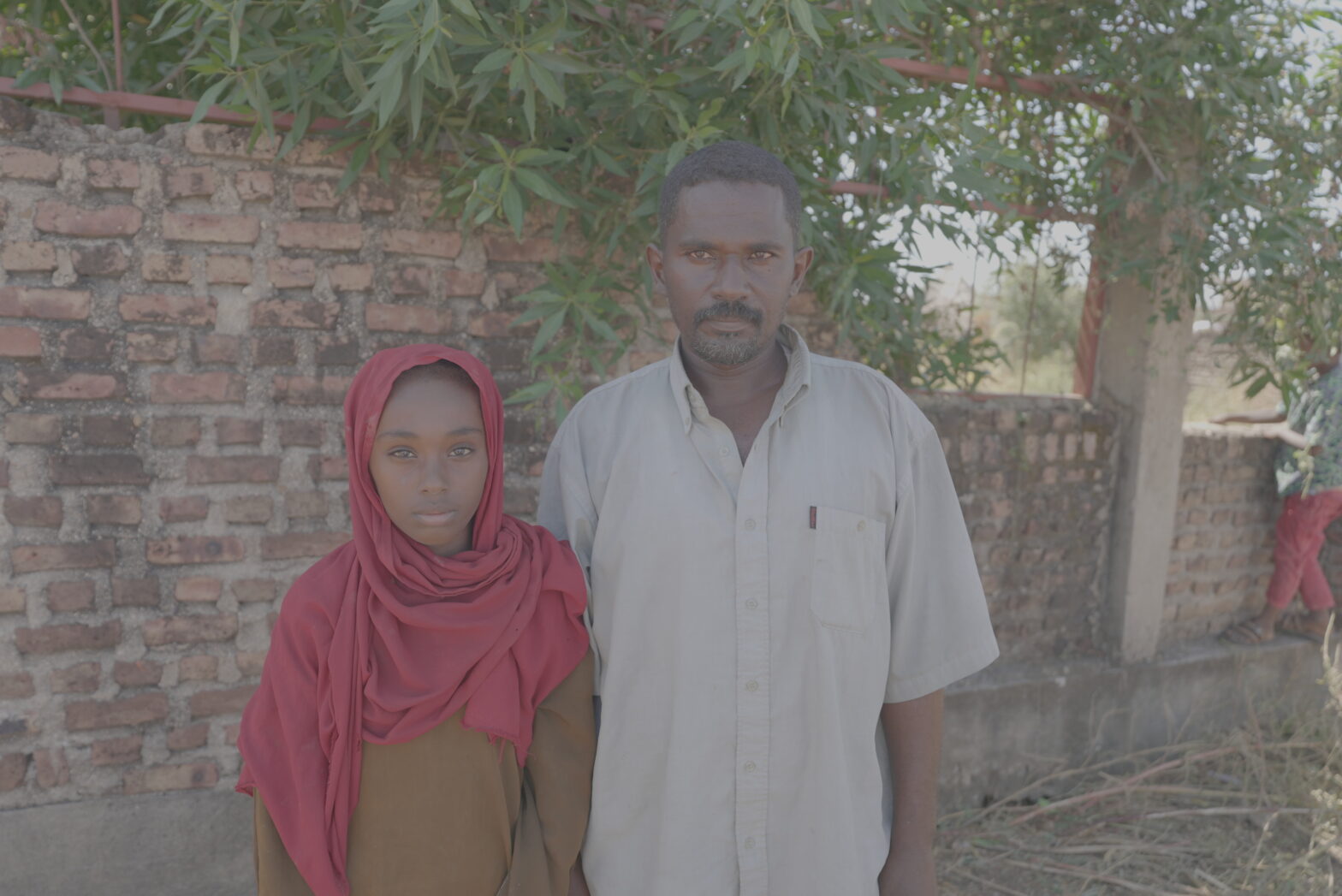
Abu Bakr, a 43-year-old farmer displaced from Sharq Al-Bahar. Like thousands of others, he lost everything when armed groups seized their land and possessions
A plea for peace
When asked what he would say to the international community, Abu Bakr’s answer is immediate:
“Stand with the people of Sudan. We are innocent. We need peace.”
Years of war have brought unimaginable suffering, yet the world’s attention has faded. Humanitarian aid is insufficient. Diplomatic efforts have stalled. Meanwhile, millions of Sudanese civilians – farmers like Abu Bakr, mothers, children, the elderly – are trapped in a crisis not of their making.
His dream for the future is simple:
“For the war to end, and for everyone to return home safely.”
Islamic Relief has worked in Sudan for 40 years, providing vital humanitarian assistance including hygiene, food and mental health support. Please support our life-saving work by donating to our International Emergency today.
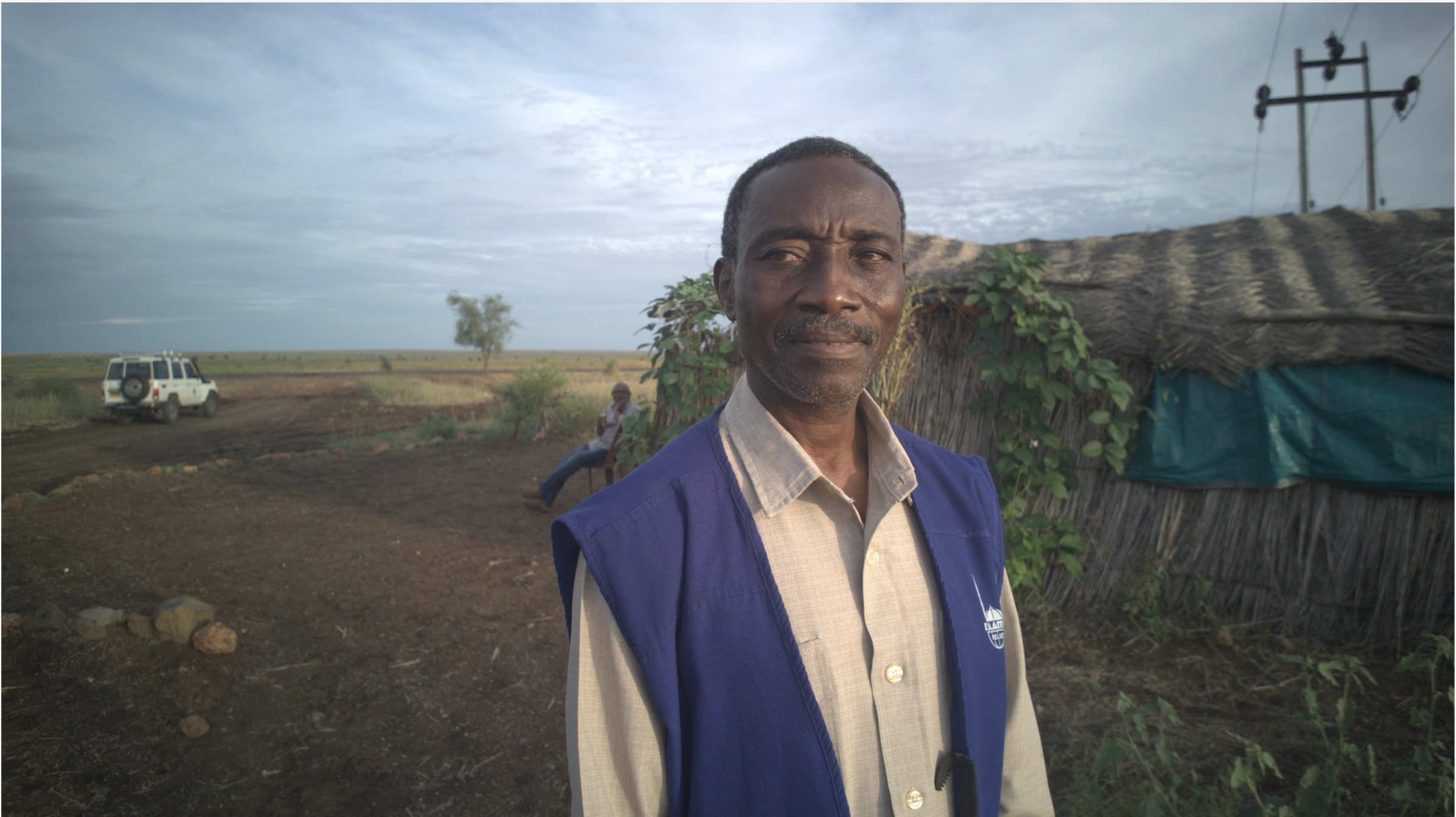
In April 2023, war erupted in Sudan, tearing apart lives, displacing millions, and leaving a trail of devastation. For Mubarak Malik Abu Baker Mohammed, an Islamic Relief staff member, the conflict has been a relentless cycle of displacement, danger, and fear, but also of unwavering humanitarian commitment.
His story is not just his own. It mirrors the suffering of millions of Sudanese civilians caught in the crossfire of a brutal war – a war that has even claimed the lives of those who dedicated themselves to helping others.
A life uprooted by war
Mubarak joined Islamic Relief Worldwide during Ramadan 2023, just days before the conflict began. Stationed in Dilling, he had barely settled into his role when violence erupted.
“At the end of Ramadan, the war started,” he recalls.
What followed was a series of forced relocations – first to El Obeid, then Sennar, then Gedaref, and finally to Blue Nile State.
“I have moved to almost all Islamic Relief offices except Port Sudan,” he says.
Each move was a desperate escape from advancing militias, looters, and gunmen. Roads were lined with armed checkpoints; towns were besieged. In Sennar, the Islamic Relief office itself became a target.
“The road from El Obeid to Sennar was full of checkpoints and robberies,” Mubarak remembers. “My own laptop and belongings were robbed there.”
Yet, even in the face of personal loss, he acknowledges a painful truth:
“When you see how others suffered, yours looks normal. When you lose your belongings, you will find others who lost everything.”
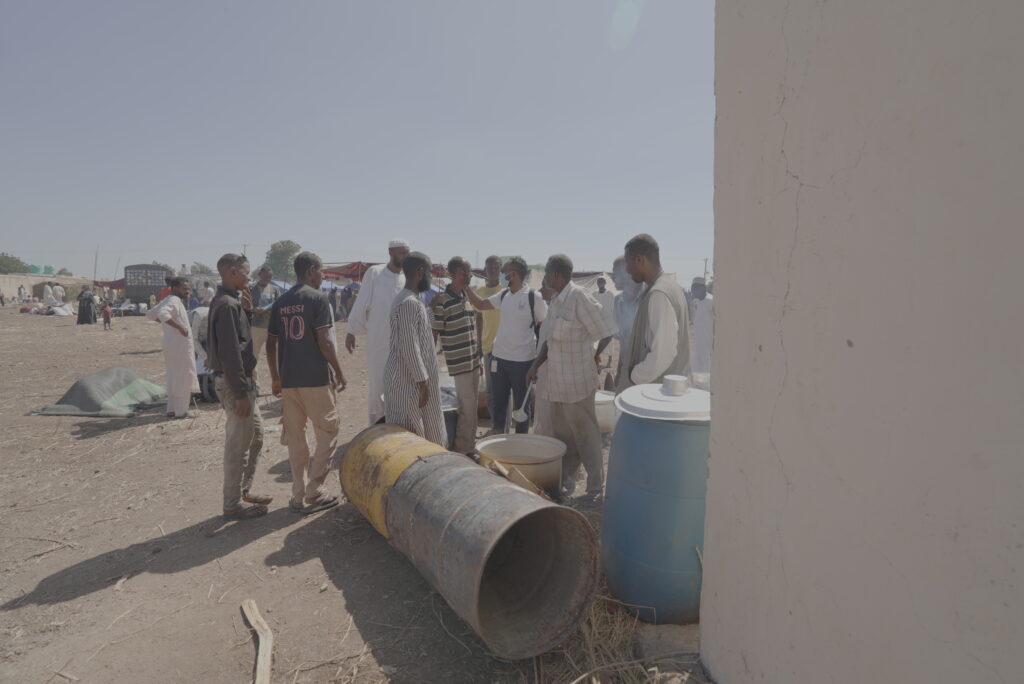
Displaced families gather at an Islamic Relief distribution point. With markets looted and banks destroyed, Islamic Relief provides the only lifeline for millions
The death of a hero
The war has not only displaced millions, but also killed humanitarian workers, volunteers, and innocent civilians. Among them was Izzeldin Mohamed Juma, a beloved member of the Islamic Relief family.
At 49 years old, Izzeldin had dedicated his entire life to serving others. For over 30 years, he worked with Islamic Relief, first as a security guard and later as a receptionist, always ensuring the safety and well-being of staff and the people we serve.
On 11 March 2025, armed men attacked and looted his home in Jebel Aulia, Khartoum. Izzeldin was killed while trying to protect his family.
His death is a devastating loss, not just for Islamic Relief, but for the countless people he helped over 3 decades of service. It is a chilling reminder of the dangers facing humanitarian workers and ordinary families every day in Sudan.
“This is the fear we all live with,” says Mubarak. “Every day, we wonder if we will make it home. Every day, we hear of another colleague, another friend, who has been killed or displaced. But we keep working because the people need us.”
A people forgotten
Sudan’s war has created 1 of the world’s worst humanitarian crises. Over 12 million people have been displaced, 30.4 million now need humanitarian aid. Famine has been declared in several regions, with more 25 million facing acute food insecurity. Hunger is rampant, healthcare has collapsed, and entire cities have been looted and burned.
Mubarak witnessed this firsthand in Dilling, a town surrounded by armed groups who prey on fleeing civilians.
“The markets were looted. Banks were looted. In this situation, we are working,” he says.
Despite the extreme insecurity, Islamic Relief has maintained a presence in many high-risk areas, delivering food, medicine, shelter, and cash assistance to displaced families.
“When you provide aid and see the happiness on the faces of IDPs (internally displaced people), you feel satisfied,” Mubarak says.
But the needs are overwhelming. Funding shortages have forced many agencies to cut critical programmes, leaving millions without support.
Sudanese men pray outside their makeshift shelter. 2 years of war have forced more than 12.5 million people from their homes – many now live in temporary camps with dwindling supplies, or have been given refuge by local families who share the little food and water they have
Why Islamic Relief stays and why it matters
Despite the dangers, Islamic Relief staff continue their work. For Mubarak, the reason is simple:
“The organisation has many services to offer, and this is what made us stay for a long time, regardless of the suffering.”
In places like West Kordofan and North Kordofan and central Darfur – now active war zones – Islamic Relief teams operate under extreme risk, ensuring that aid reaches those who need it most.
But as the war enters its third year, the world continues to ignore the crisis. Donor fatigue and competing global crises threaten to leave Sudan’s people forgotten.
We must not look away
Years of war have shattered Sudan. Families walk for days on foot to escape violence. Children go hungry. Hospitals without supplies turn away the sick and wounded.
Mubarak’s story, and Izzeldin’s sacrifice, are testaments to both the horrors of this war and the strength of those who refuse to give up.
“I am an example of colleagues who are affected by the war and witnessed these difficult times,” Mubarak says. “All Islamic Relief staff in Sudan have suffered and have stories that could be case studies.”
As we mark this grim anniversary, we must ask: Will the world continue to look away?
Islamic Relief remains on the frontlines, but we cannot do it alone. Sudan needs urgent funding, access for aid agencies, and, above all, a lasting peace.
The people of Sudan have endured enough. They deserve more than silence.
Islamic Relief has been working in Sudan since 1984, providing emergency relief, healthcare, food, and shelter to vulnerable communities. Despite the dangers, our teams remain committed to serving those in need.
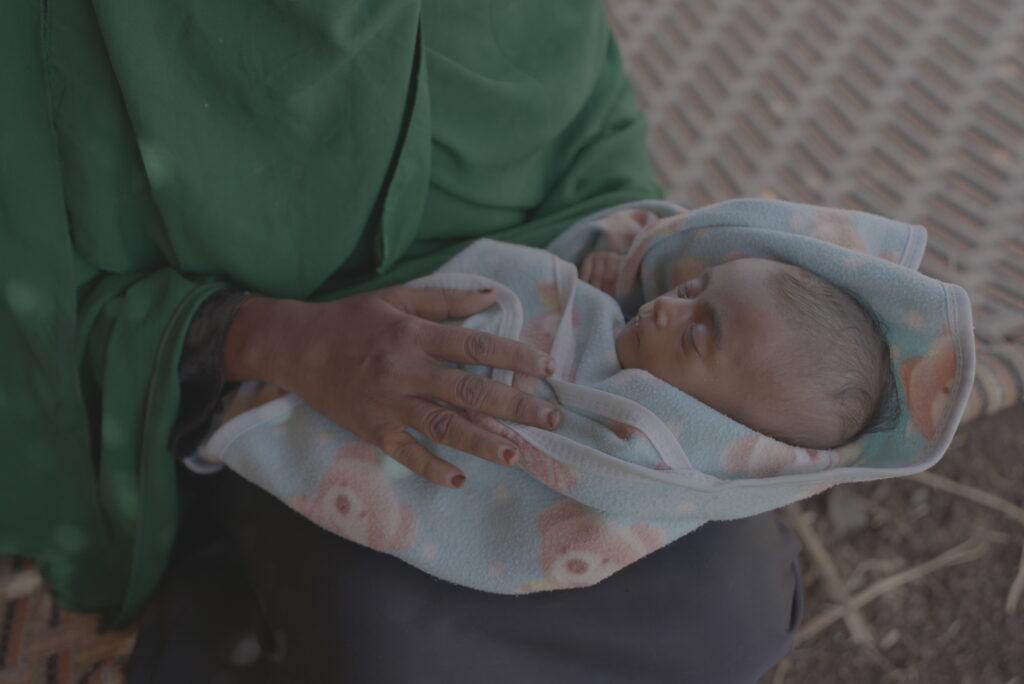
A mother receives medical care for her malnourished child from Islamic Relief staff. Sudan’s healthcare system has collapsed, leaving aid groups as the only healthcare providers in many areas.
One month of Israel’s total closure of Gaza is pushing the territory back towards famine, Islamic Relief warns. The hunger crisis is growing more desperate every day, as Israel steps up efforts to make Gaza unliveable by shutting off aid, destroying infrastructure and intensifying deadly attacks on civilians.
Palestinians in Gaza are being systematically starved. Food is rotting on trucks that are prevented from reaching malnourished children just a few miles away, and vital medicine for sick patients is expiring while blocked at the border. Yesterday all bakeries in Gaza had to close as they ran out of flour and cooking gas.
Since 2 March, Israel has completely shut all crossings into the territory, preventing any humanitarian or commercial supplies from entering, including food, medicine and fuel.
Doctors report that malnutrition is now rising again among children, and hundreds of thousands of people are facing critical food shortages as supplies run out. Denying people aid and using starvation as a weapon of war is a clear and inhumane violation of international law.
Since the closure, Islamic Relief staff and partners have managed to keep distributing daily food and hot meals to thousands of families, using supplies already within Gaza. But the quantities are decreasing every day and it is getting harder to keep going as many items are running out.
The Israeli military is also further intensifying attacks on civilians, with dozens of people killed in bombing over Eid al Fitr, including young children and pregnant women. Hundreds of thousands of people have once again been ordered to leave their homes in the north and south of Gaza – forcing elderly people, young children, sick patients and people with disabilities to walk miles in search of shelter. Yet nowhere is safe as bombs continue to rain down on shelters, health clinics and densely populated areas.
International governments, especially Israel’s allies, must urgently demand that Israel allows aid and vital supplies into Gaza, and ends all attacks on civilians.
Islamic Relief is preparing to respond after a powerful earthquake rocked Myanmar and Thailand.
The magnitude-7.7 quake hit central Myanmar close to the city of Mandalay in the early hours of Friday 28 March. A 6.4-magnitude aftershock followed shortly after.
At least 144 people have been killed and more than 700 injured in Myanmar, according to reports, but there are fears the toll will be much higher. Mandalay is reported to have suffered widespread destruction, including the collapse of a 5-storey building and a bridge. Some people were reportedly killed while praying as a mosque collapsed.
As far as 900 kilometres away in the Thai capital, Bangkok, an unfinished high-rise building collapsed in rubble.
The full scale of the damage is not yet clear, with communications issues hampering efforts to assess the situation, which remains fluid, with more aftershocks expected.
Search and rescue efforts are underway. Myanmar has declared a state of emergency, with authorities requesting international assistance. In Thailand, Bangkok has been declared as a ‘disaster area’.
Islamic Relief’s response
Islamic Relief is taking steps to liaise with fellow UK agencies and local organisations we have partnered with previously to assess the scale of the disaster and needs of those affected.
We have set aside funds for an initial response, to begin once needs are clear and access to affected areas are confirmed by our partners.
The disaster comes at a time when many humanitarian organisations operating in Myanmar have been impacted by funding cuts. Myanmar is subject to sanctions, with humanitarian exemptions in place.
Mandalay’s population has swelled in recent years with people arriving in the city having fled fighting elsewhere in Myanmar.
Help Islamic Relief respond to emergencies around the world. Donate to our International Emergency fund now.