One year ago, Türkiye and Syria faced a devastating earthquake, swiftly followed by hundreds of aftershocks and another deadly quake. Reflecting on the resilience and hardships of survivors, Shahin Ashraf, Islamic Relief’s head of global advocacy, calls for support with sustained aid and recovery.
 The earthquake of 6 February 2023 exacerbated challenges faced by communities in dire need. The 11 provinces in Türkiye’s southern region, already battling high poverty rates, became epicentres of devastation. Meanwhile, in Syria’s crisis-ridden northwestern region, where 90% of the population relied on humanitarian aid, the earthquake added another layer of hardship.
The earthquake news from Türkiye and Syria sent a shiver down my spine, triggering memories of my own unsettling experience. In the eerie stillness just before morning prayer at 4:31am on 17 January 1994, a deep rumbling noise, resembling the approach of a distant train, pierced the silence, accompanied by violent shaking. The chilling sounds of my neighbours’ screams and distant voices urgently declaring, “Earthquake!”
In 2023, hearing about the earthquake instantly transported me back to that morning in Los Angeles, USA. While I can’t fully comprehend the experiences of those affected in Türkiye and Syria, I resonate with the lingering feelings that accompany such profound events. The haunting memories, displacement, and rebuilding process echo my own journey.
In this shared resonance of resilience and recovery, a universal understanding emerges, transcending geographical boundaries and cultural differences. Reflecting on seismic events that shape our lives globally. The threads of fear, uncertainty, and the resilience needed to navigate the aftermath of disasters bind us as a global community. The empathy stirred by these news reports reminds me of our interconnectedness and the fragility of the ground we stand upon.
I couldn’t help but feel a kinship with those facing the daunting task of rebuilding. The road ahead is undoubtedly challenging, marked by physical reconstruction and emotional healing. However, my own experience has taught me that the human spirit is remarkably resilient.
The human toll
The preexisting vulnerabilities of these regions intensified the impact of the earthquake, creating a profound humanitarian crisis.
For example, even before the earthquakes, increasing pressures on water sources in Türkiye and Syria due to climate change impacts, population growth, and socio-political considerations were evident. With the damage to infrastructure caused by the earthquakes, water scarcity is now an even more pressing problem.
The earthquakes and aftershocks claimed over 50,000 lives and left more than 100,000 injured. The numbers speak of tragedy. According to a stark damage assessment study by Ministry of Environment, Urbanisation and Climate Change, over 50,000 homes were destroyed, thrusting a significant portion of the population into displacement and homelessness.
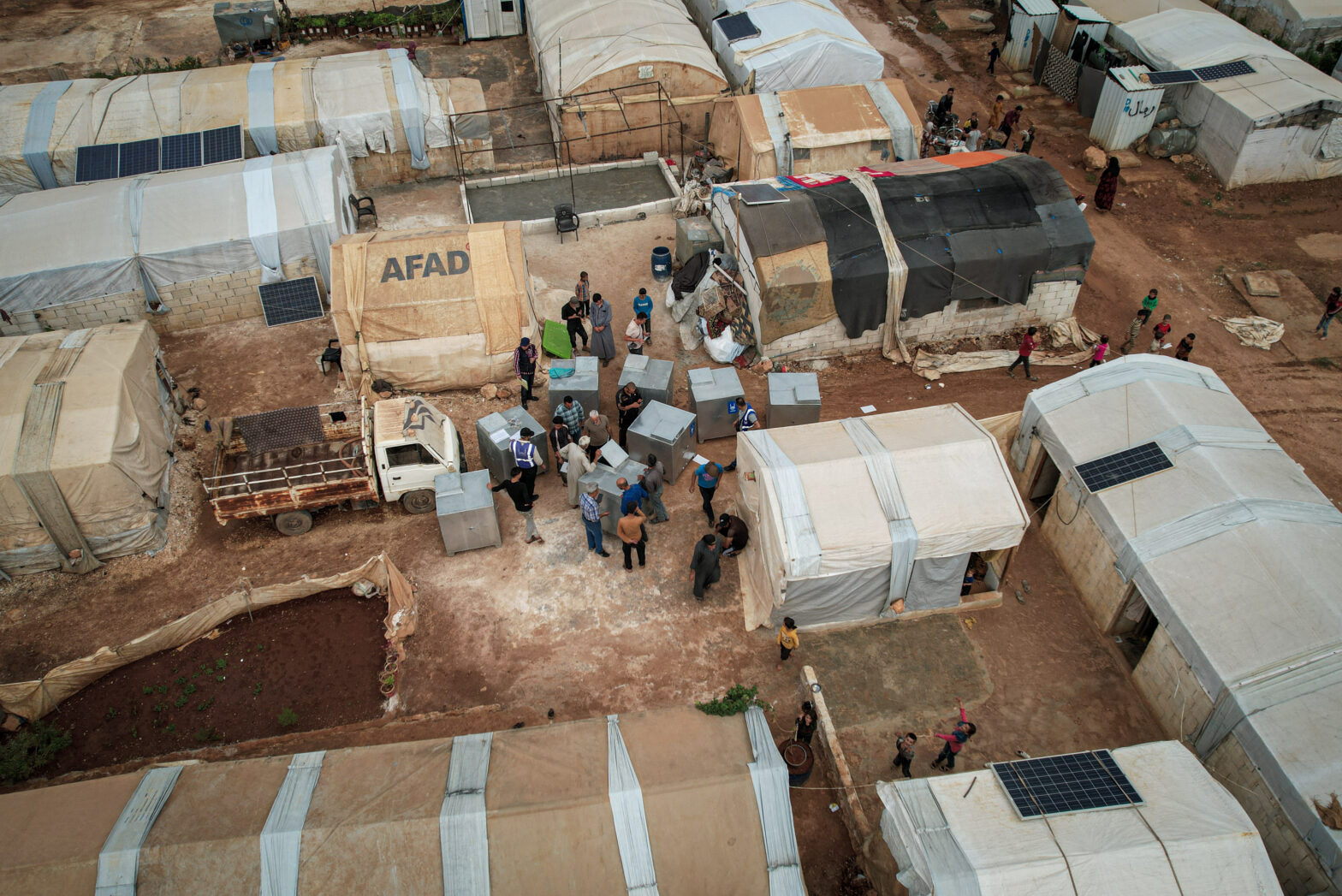
Picture this: more than 3 million people found themselves displaced in Türkiye alone, with 2.6 million individuals seeking refuge in temporary settlements that lacked the essentials: clean water, sanitation, and healthcare. These were not just statistics; they were the stories of shattered lives, families torn from their homes, grappling with the harsh reality of inadequate living conditions.
Venture into northwestern Syria, and the toll became even more heartrending. In a region where more than 2.74 million were already displaced, nearly 109,000 individuals were further uprooted by the earthquake’s devastating force.
The infrastructure damage in Syria was compounded by the scars of previous crises. Buildings broken and battered by the earthquake were already weakened, cracked by the intensity of past shelling. It was a tragic overlap of 2 calamities, leaving traumatised communities grappling not just with the consequences of nature’s fury but also the lingering wounds of human violence.
I was incredibly moved by the story of Ahmad, a Syrian refugee, who lived in a peaceful village before fleeing to Türkiye in search of safety:
“With each passing day, our village transformed from a haven of peace into a tapestry of chaos and despair. Work ceased, and food became scarce, forcing us into a nomadic life, moving from one village to another in search of safety,” Ahmad said, describing his ordeal to Islamic Relief.
As the situation worsened, Ahmad said his family made “the heart-wrenching decision to leave everything behind” as they set off on a dangerous journey to neighbouring Türkiye. He described the language barrier as the greatest trial, “an invisible wall standing between them and their new home.” But still, they felt safer there than at home in Syria – until 6 February 2023.
“The earthquake struck without warning, shaking the very foundations of our home. We rushed outside, watching in horror as the earth convulsed. Our house, our sanctuary, crumbled before our eyes, but thankfully, our lives were spared.”
Ongoing struggles
Though the immediate danger has passed, both countries still grapple with earthquake aftershocks. With only 54% of the United Nations’ Türkiye appeal funded and 36% of the Humanitarian Response Plan funded for Syria, donor fatigue poses a significant challenge.
The region’s geopolitical landscape, coupled with aid withdrawals, threatens further humanitarian crises.
Call to action
In the context of Syria, the call for dialogue is a plea for collaborative problem-solving amidst the complex challenges faced by the country. Islamic Relief continues to emphasise ongoing engagement between sanctioning authorities and aid agencies to ensure relief efforts are not hindered.
Given the interconnected challenges experienced by the affected communities in Syria, this call to action underscores the necessity of a collective effort that goes beyond immediate relief. As we advocate for sustainable solutions in post-earthquake recovery and conflict resolution, addressing challenges posed by sanctions and infrastructure issues becomes imperative. Islamic Relief’s call for a shift from punitive measures to collaborative dialogue underscores the need for a nuanced approach.
Donate and support
In times of crisis, communities come together, rising above the rubble to support one another. It is my hope that the affected regions find strength in unity, drawing from the collective well of human compassion. The seismic waves may have shaken the foundations, but the indomitable spirit of those affected will undoubtedly guide them through the process of rebuilding, forging a narrative of recovery, strength, and solidarity.
As the days turned into months, and the months into a year, the impact of the Türkiye-Syria earthquakes refuses to diminish. The scars left on the landscape are not just physical but etched into the collective memory of communities that continue to grapple with the aftermath. In the face of such persistent adversity, it’s a harsh reality that the world’s attention has largely moved on, diverted by the pressing demands of other crises. However, even as the headlines fade, Islamic Relief remains resolute, addressing the ongoing needs of communities still reeling from the dual blows of nature’s wrath and the enduring repercussions of crisis.
This steadfast commitment goes beyond the immediate aftermath, beyond humanitarian response. It’s a pledge to remain engaged, to continue offering assistance to families still struggling for survival. For those who are left, Islamic Relief remains a crucial link to sustained aid and recovery.
So, as we reflect on the year that has passed since the Türkiye-Syria earthquake, let’s not just remember the initial outpouring of support but also acknowledge the ongoing need. The call to give to Islamic Relief is not a fleeting one; it’s an enduring plea to ensure that assistance and hope persist in the lives of those who still bear the heavy burden of rebuilding not just homes but entire lives. In the face of such ongoing challenges, your continued support can make a lasting difference.
Islamic Relief has been responding to earthquakes and other crises in the region since the 90s. On the anniversary of the latest deadly quakes, we are re-affirming our commitment to survivors like Ahmad, Emina and Ali. People battered by this disaster, but not broken. We will remain by their sides as they begin the huge task of rebuilding their shattered lives and communities.
“Now, we face many challenges, but your assistance greatly alleviates our burden,” points out Emina, while Ahmad reflects that his is “a story of resilience and hope.”