

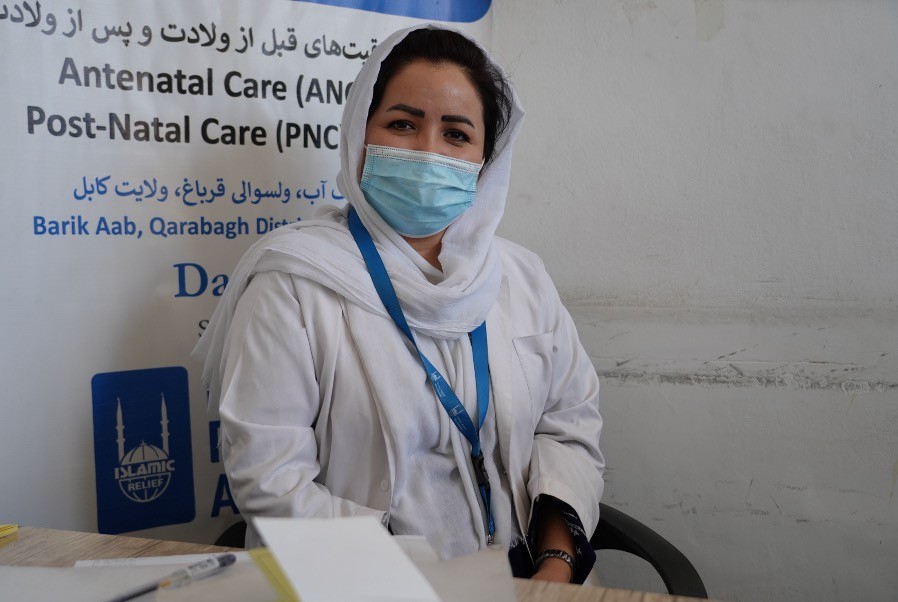
Dr Masih Farahimi leaves for work each day fearing arrest simply for being a woman. Yet she continues to show up, knowing that pregnant mothers and newborns depend on her presence. Her story reveals both the crushing weight of gender-based restrictions and the unbreakable spirit of Afghan women refusing to disappear.
“Every day when we leave the house, we despair that we might be arrested for being a woman and not returned back.”
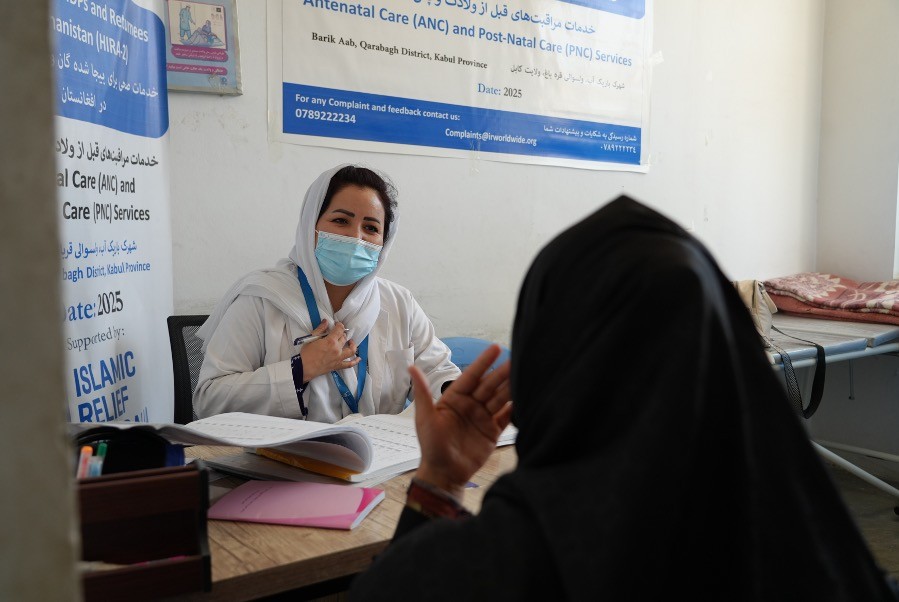
Dr Masih Farahimi speaks these words with quiet intensity. A medical doctor working as a midwife with Islamic Relief’s Hira Project since March 2020, Dr Farahmi embodies a paradox that defines life for countless Afghan women: continuing to serve her community whilst living under restrictions designed to erase her from public life entirely.
As the world marks 16 Days of Activism against Gender-Based Violence, from 25 November to 10 December, Dr Masih’s reality demands our attention. One in 3 women around the world experience violence, but for Afghan women, the violence isn’t just physical. It’s systemic, structural, and suffocating.
The daily calculation
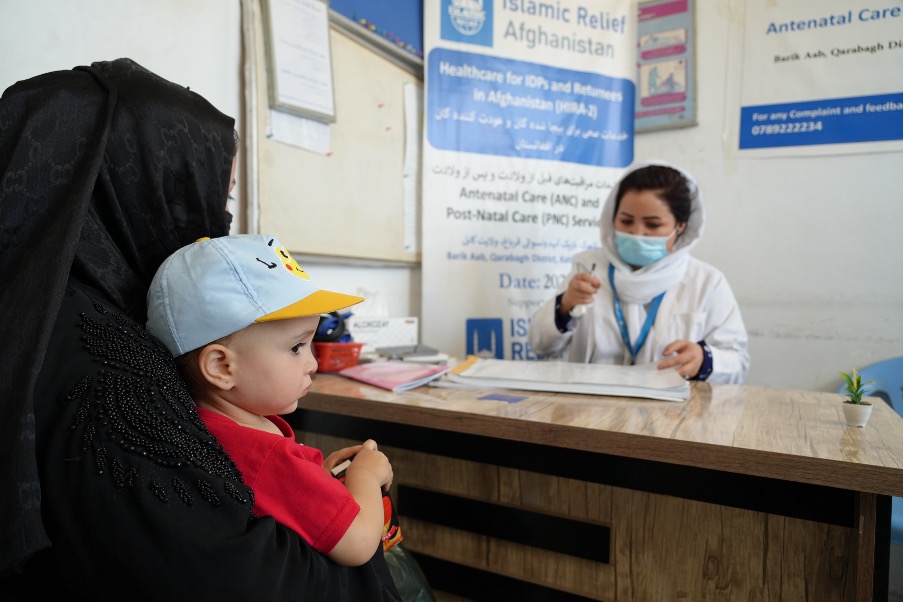
Dr Masih works full time in a maternity ward, focusing on antenatal care, postnatal care, and family planning services. Basic healthcare that saves lives. Yet reaching work requires navigating a maze of restrictions that would break most people.
She is forced to travel with a mahram (a male guardian) almost everywhere; There is a constant dress code to adhere to; Training or meetings outside the province are often forbidden.
Dr Masih has to make the same mental calculation each morning: is the risk worth it?
“We don’t have security,” she explains simply. The understatement masks a profound truth. Since August 2021, Afghanistan has implemented increasingly severe restrictions on women.
In December 2024, authorities banned women from studying medicine, nursing, or midwifery, closing some of their last pathways to professional healthcare roles. Earlier that year, a new law formalised existing restrictions and introduced fresh ones, including prohibiting women from speaking aloud in public.
For female health workers like Dr Masih, these restrictions create impossible situations. Nearly 90% of medical staff in earthquake-affected regions are men. When disasters strike, women and girls comprise over half the casualties but face critical barriers accessing care. Male doctors cannot examine them under strict social codes. Female doctors are vanishingly rare and increasingly restricted.
What keeps her going
“The need of the people, especially women and children, motivates me,” Dr Masih says. “Many of them depend on our presence for basic healthcare and awareness. Knowing that I can make even a small difference gives me strength to keep going.”
“Even then, it’s hard.” She adds.
The mental and emotional toll of working under such conditions is immense. Female-friendly spaces where women could gather and support each other have closed. Dr Masih copes by staying home when mentally exhausted, spending time with other women, sitting with family, and trying to think positively.
“I believe that the situation will eventually change for the better, inshallah,” she says, her faith evident, despite everything.
The ripple effects
The restrictions don’t only harm female health workers. They devastate the entire healthcare system and the communities it serves. Afghanistan now has 1 of the world’s largest workforce gender gaps. Just 1 in 4 women is working or seeking work, compared to nearly 90% of men.
Dr Masih shares an example: “I know a woman who suffers from haemorrhoids but is not allowed to go to the hospital because there is no female doctor or surgeon available. Her husband also refuses to let a male doctor examine her.”
The woman suffers in silence, denied care because of her gender.
It is a story repeated across Afghanistan, where women’s access to healthcare has become increasingly difficult. Fear, mobility restrictions, education bans, and systemic discrimination keep women and girls from getting the care they need.
A different kind of violence
This is gender-based violence. Not always physical, but violence, nonetheless. It is the deliberate erasure of women from education, employment, and public life. The systematic denial of their autonomy, their voice, their right to exist fully in society.
The UN has stated these restrictions may constitute crimes against humanity. Yet women like Dr Masih continue showing up, providing care, refusing to be erased.
Dr Masih’s requests are straightforward: more flexibility around travel restrictions and access to training, safe transportation options for female staff, more community sensitisation and an increase in mental health support.
“These would make a big difference,” she states.
But her deeper hopes go further.
“I hope all these restrictions will be lifted and women will be allowed to make decisions about their own lives. Schools and universities should reopen. We should not be punished further simply because of our gender. I want my rights to be respected as a human being and not to be deprived of my basic freedoms.”
The strength to continue
“I am a very strong woman, alhamdulillah,” Dr Masih says.
This is not bravado. It is survival. It’s the strength of every woman who continues working despite restrictions designed to stop her.
Islamic Relief continues to support healthcare workers like Dr Masih through projects like Hira, providing safe and supportive work environments despite enormous challenges. The organisation tries to create inclusive environments for female staff, ensuring they work with dignity and respect even as the broader context makes this increasingly difficult.
“Despite the current restrictions, I find the Islamic Relief workplace relatively safe and supportive,” she reflects. “My team always ensures we work with dignity and respect.”
In a country where being a woman in public can lead to arrest, where speaking aloud is forbidden, where education and employment are systematically denied, Dr Masih continues to serve. Not because it’s easy. Not because it’s safe. But because lives depend on it.
That’s not just resilience. That’s revolutionary hope in action.
As we mark the 16 Days of Activism, Dr Masih’s story reminds us that solidarity requires more than sympathy. It demands action. Afghan women haven’t given up. Neither should the international community.
Islamic Relief stands with women and girls facing violence and discrimination worldwide. During the 16 Days of Activism and every day, we remain committed to supporting the rights, dignity, and wellbeing of all people. Support our work today and donate.