

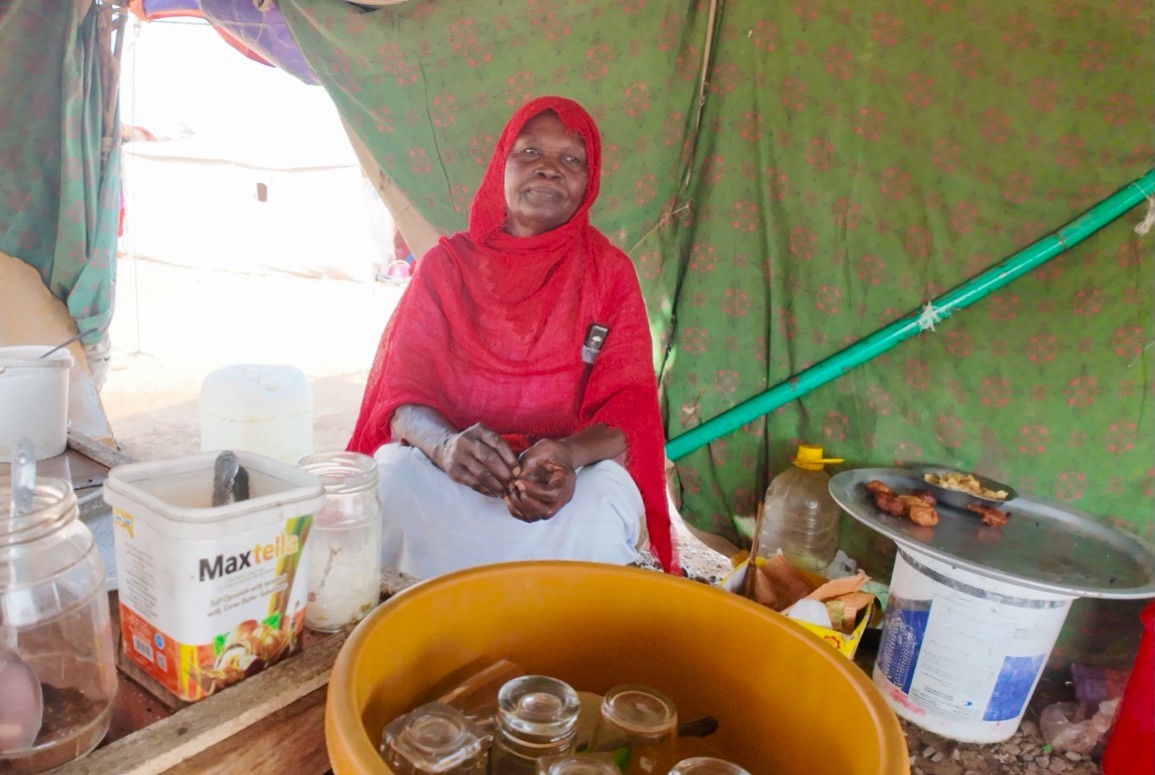
In a crisis that has stripped millions of their basic rights, Khatmala’s community kitchen proves that humanity survives even when systems collapse.
In Gedaref’s internally displaced persons camps, Khatmala runs a ‘takaaya’ – a community kitchen – where she provides and shares food and drink, that have become lifelines for those who have lost everything.
“I fetch water, get the ice ready, and then people start coming,” she says. “My joy never fades. I just keep talking with people, I don’t like to sit idle.”
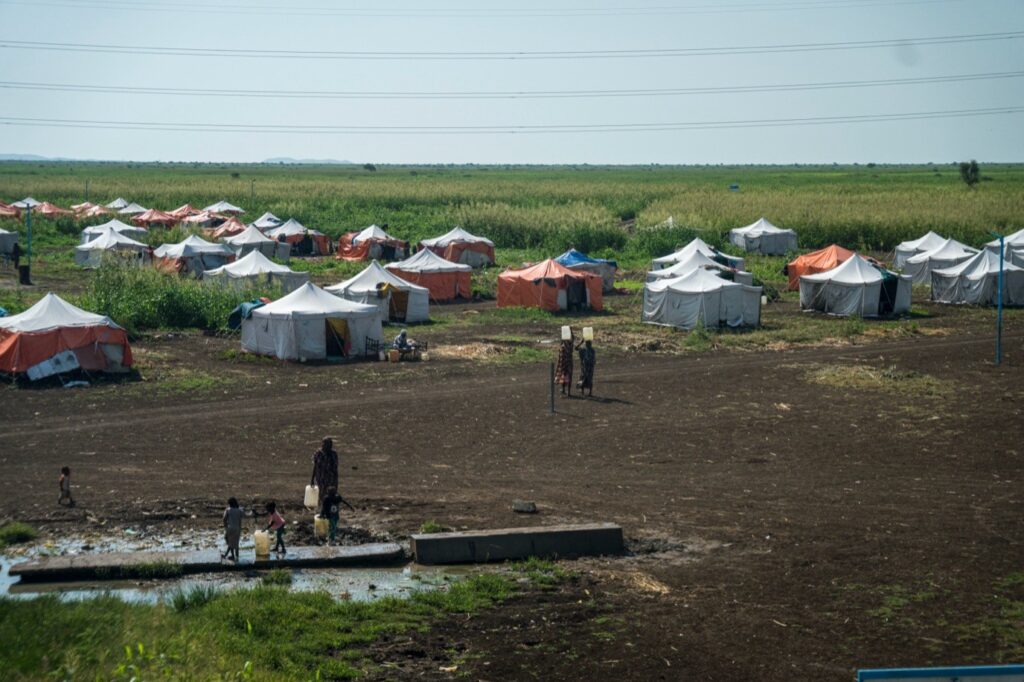
In a nation where more than 12 million have been displaced and over 30 million people need humanitarian assistance, Khatmala’s takaaya has become something extraordinary – the difference between life and starvation for people in Sudan.
What happens when every right disappears
The long running conflict in Sudan has created what the UN calls the world’s worst humanitarian crisis. Over 80% of healthcare facilities are closed, food production has collapsed and there famine-like conditions being reported from multiple regions.
For women and girls, the conflict has been devastating.
More than 12 million live at risk of gender-based violence. Sexual violence has become a systematic weapon of war with widespread and horrific reports of women being forced into sexual slavery, gang rapes and the assault of children.
Simply being female in Sudan, as UN Women puts it, is “a strong predictor of hunger, violence and death.”
The fundamental rights in the Universal Declaration – life, security, food, shelter, freedom from torture – have been obliterated for millions.
This is the context in which Khatmala serves tea each morning.
A true community kitchen
Takaayas in Sudan represent something profound: when institutions fail, communities become the last line of defence.
“Every Friday, I cook breakfast and sometimes lunch,” Khatmala explains. Camp police help when they can. Neighbours contribute what little they have. “Everyone comes and eats. You have to extend your hand to others.”
Before Islamic Relief’s support, conditions were harsh.
“When it rained, I sat there soaking wet,” she remembers. The organisation brought a tent, sheeting, supplies. “Now I’m covered. Now I can do more.”
The support represented more than materials, it was recognition. Her work matters.
“I can’t ignore a hungry person. If I see a neighbour’s child who hasn’t eaten, I share what I have. That’s just God’s mercy.
“I try to give what I can, so I don’t forget the blessings I receive,” she reflects. “When you eat from what God gives, remember those who have less.”
When the world looks away
Islamic Relief’s first ever intervention was responding to famine in Sudan in 1984 – Over 4 decades later and we are still here. In the past 2 years alone, Islamic Relief has reached more than 1.2 million people with vital humanitarian aid including food, water, medical support, dignity kits, and support for initiatives like Khatmala’s kitchen.
The gap between need and response is catastrophic, however. Without urgent action, Sudan risks total state collapse, a nightmare with massive regional consequences. Without proper funding and without political will to end the conflict, millions more will be pushed past the brink.
When asked what message she would give to people beyond Sudan, Khatmala says: “I just want to tell people: do good. We don’t need to brag – just say, ‘Alhamdulillah, we helped.’ Even a handful of dirt, if given sincerely, is valuable to God.
“Whatever you can give, we accept with open hearts. We just want your kindness, your good words, your prayers.”
The work that cannot wait
Khatmala’s story offers an urgent reminder: human rights aren’t abstract principles. They are fundamentals. They are the difference between life and death.
This Human Rights Day marks the end of 16 Days of Activism Against Gender-Based Violence campaign, we need to celebrate and support community leaders like Khatmala. We need to ensure women’s participation in peace processes and hold perpetrators accountable. Transform pledges into resources that actually reach people.
Crucially we need to view people like Khatmala clearly, not as helpless victims, but as architects of their own survival, deserving partnership and support.
Islamic Relief has been supporting vulnerable communities in Sudan for over 40 years. To support our lifesaving work and help women like Khatmala continue serving their communities, please donate to our International Emergency Appeal today.